
Ipamorelin 3mg + Tesamorelin 13mg (16mg Blend Vial) Dosage Protocol
GH-axis blend — a tesamorelin-dominant 13:3 vial (81% tesamorelin / 19% ipamorelin); tesamorelin is approved only for HIV-associated lipodystrophy, this blend is not.
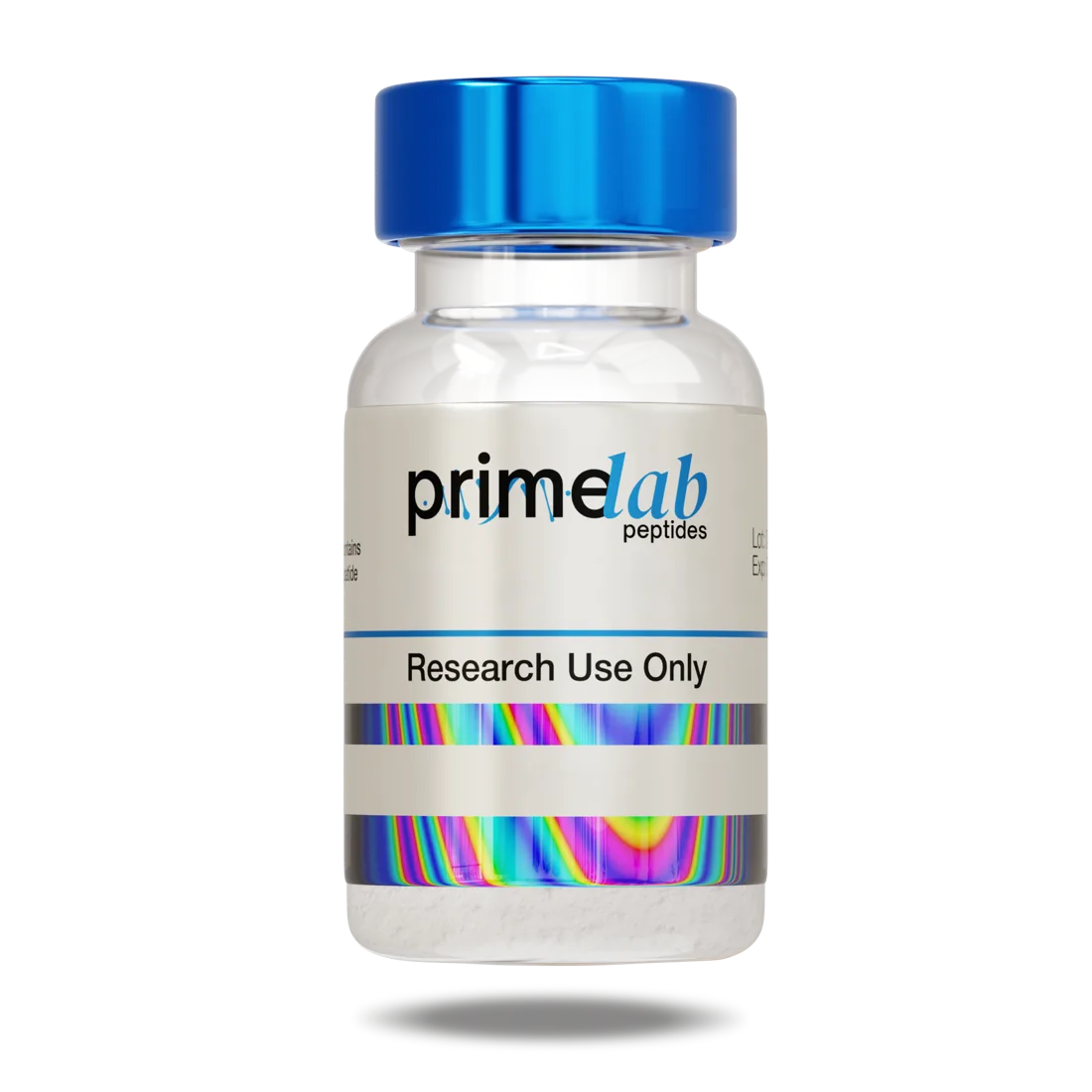
Fixed ratio: Tesamorelin 13 mg : Ipamorelin 3 mg — a 13:3 blend (81.25% / 18.75%). Every withdrawal keeps that ratio, so the two components cannot be dosed independently.
Pre-filled with this protocol’s recommended BAC water and documented starting dose — edit any field to run your own numbers. Reconstitution math only — not dosing advice. U-100 syringe: 100 units = 1 mL. Full reconstitution guide → · Advanced calculator →Mix & measure Ipamorelin + Tesamorelin · 16 mg
Tesamorelin + Ipamorelin Dosage Chart & Reconstitution Guide
One combined 16 mg blend vial — total-blend dosing, once daily, step by step.
Standard / Gradual Approach (3 mL = ~5.33 mg/mL)
- ▪Reconstitute: Add 3.0 mL bacteriostatic water to the single 16 mg blend vial → about 5.33 mg/mL total peptide (5,333 mcg/mL). That is the largest volume the vial format comfortably holds.
- ▪Total daily dose: Weeks 1–4 at 800 mcg total, then Weeks 5–8 at 1,600 mcg total, once daily (or 5 days on, 2 off).
- ▪Easy measuring: At 5.33 mg/mL, 1 unit on a U-100 syringe is about 53 mcg of total blend — 800 mcg = 15 units, 1,600 mcg = 30 units.
- ▪The 13:3 split: Because both peptides share the vial, every dose is 81.25% tesamorelin and 18.75% ipamorelin. 800 mcg total = 650 mcg tesamorelin + 150 mcg ipamorelin; 1,600 mcg total = 1,300 mcg tesamorelin + 300 mcg ipamorelin.
- ▪Vial arithmetic: At 1,600 mcg per day, one 16 mg vial covers about 10 days.
| Phase / Week(s) | Total Blend Dose & Frequency | Volume (U-100 units / mL) |
|---|---|---|
| Weeks 1–4 | 800 mcg total (1× daily) | 15 units (0.15 mL) |
| Weeks 5–8 | 1,600 mcg total (1× daily) | 30 units (0.30 mL) |
Why Ipamorelin + Tesamorelin draws research interest
These are the directions researchers and the peptide community most often explore Ipamorelin + Tesamorelin for — so you know you’re in the right place. They describe what is being studied, not proven benefits, approved uses, or promised results.
Visceral fat / lipolysis
Tesamorelin is FDA-approved to reduce excess abdominal fat in HIV-associated lipodystrophy, where phase-3 trials cut visceral adipose tissue by roughly 15-18%. This blend itself is not approved.
GH & IGF-1 output
Studied for driving pulsatile growth hormone release from two receptors at once; tesamorelin raised IGF-1 by about 108 ng/mL in the pooled phase-3 dataset.
Selective GH pulse
Ipamorelin is the first GHS-R1a agonist shown to release GH without raising ACTH or cortisol, which is the stated rationale for pairing it with a GHRH analog.
Ratio-fixed research format
The 13:3 vial is a manufacturing choice, not a studied regimen: no trial has ever tested tesamorelin and ipamorelin together, in this or any ratio.
Evidence ranges from early laboratory work to clinical trials depending on the use — the sections below cover the actual data and sources.
Quickstart Highlights
This page covers a single 16 mg combined blend vial holding tesamorelin 13 mg + ipamorelin 3 mg. Unlike the 1:1 10 mg vial, this format is deliberately tesamorelin-dominant: about 81% of every microgram you withdraw is tesamorelin and about 19% is ipamorelin. Tesamorelin is a stabilized analog of growth-hormone-releasing hormone, GHRH(1–44), that acts on pituitary GHRH receptors[1]; ipamorelin is a selective pentapeptide agonist of the ghrelin receptor GHS-R1a[5]. Pairing them is meant to push the growth-hormone axis through two separate receptors in one injection.
Read the status of each half honestly. Tesamorelin (Egrifta / Egrifta SV) is FDA-approved for one indication only — reduction of excess abdominal fat in HIV-associated lipodystrophy[4] — and the approved product is a fixed-strength kit reconstituted to a prescribed volume, not a grey-market blend vial[8]. Ipamorelin is approved nowhere; its entire human record is a single intravenous dose-escalation pharmacokinetic study[6], and it never completed clinical development. No trial has ever tested the two peptides together, in this 13:3 ratio or any other. Everything below is a research and educational reference, not medical guidance.
Add 3.0 mL bacteriostatic water to the single 16 mg blend vial → about 5.33 mg/mL total peptide (4.33 mg/mL tesamorelin + 1.00 mg/mL ipamorelin).
800–1,600 mcg of total blend once daily (or 5 days on, 2 off) across an 8–12 week cycle; each dose splits 81% tesamorelin / 19% ipamorelin.
At 5.33 mg/mL, 1 unit on a U-100 syringe is about 53 mcg of total blend; 800 mcg = 15 units and 1,600 mcg = 30 units.
Lyophilized: store at −20 °C (−4 °F). Once reconstituted, refrigerate at 2–8 °C (35.6–46.4 °F) and do not freeze the solution.
Advanced / Aggressive Approach (2 mL = 8 mg/mL)
- ▪Reconstitute: Add 2.0 mL bacteriostatic water to the single 16 mg blend vial → 8 mg/mL total peptide (8,000 mcg/mL).
- ▪Total daily dose: Weeks 1–4 at 1,600 mcg total, then Weeks 5–8 at 2,400 mcg total, once daily (or 5 days on, 2 off).
- ▪Easy measuring: At 8 mg/mL, 1 unit is 80 mcg of total blend — 1,600 mcg = 20 units, 2,400 mcg = 30 units.
- ▪The 13:3 split: 2,400 mcg total = 1,950 mcg tesamorelin + 450 mcg ipamorelin.
- ▪Vial arithmetic: At 2,400 mcg per day, one 16 mg vial covers only about 6–7 days.
Worth naming plainly: at the upper end of this column the tesamorelin share (about 1,950 mcg) lands close to the 2 mg once-daily dose used in the phase-3 lipodystrophy trials[1], while the ipamorelin share has no human dose precedent at all — ipamorelin has only ever been given to people as a short intravenous infusion in a pharmacokinetic study[6].
| Phase / Week(s) | Total Blend Dose & Frequency | Volume (U-100 units / mL) |
|---|---|---|
| Weeks 1–4 | 1,600 mcg total (1× daily) | 20 units (0.20 mL) |
| Weeks 5–8 | 2,400 mcg total (1× daily) | 30 units (0.30 mL) |
Reconstitution Steps
Both peptides are lyophilized together in one vial, so a single reconstitution fixes the concentration of both at once.
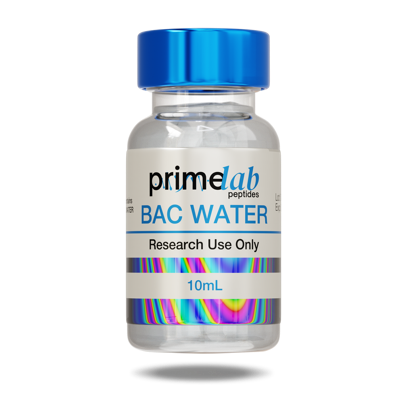
- ▪Draw 3.0 mL (Standard) or 2.0 mL (Advanced) of bacteriostatic water into a sterile syringe.
- ▪Release it slowly down the vial’s inner wall so the powder is wetted without foaming.
- ▪Swirl or roll the vial gently until both peptides fully dissolve — never shake it.
- ▪Label the vial with the date and the total concentration, then refrigerate at 2–8 °C (35.6–46.4 °F), shielded from light.
- ▪Write the split on the label too (81% tesamorelin / 19% ipamorelin) — on a blend vial the total concentration alone does not tell you how much of each peptide a given volume contains.
Supplies Needed
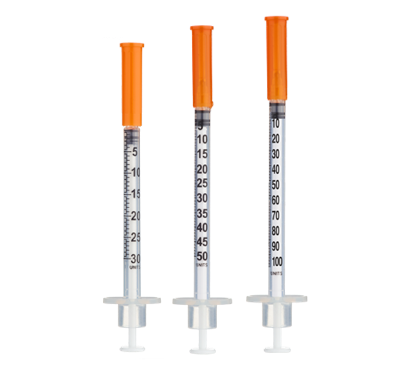
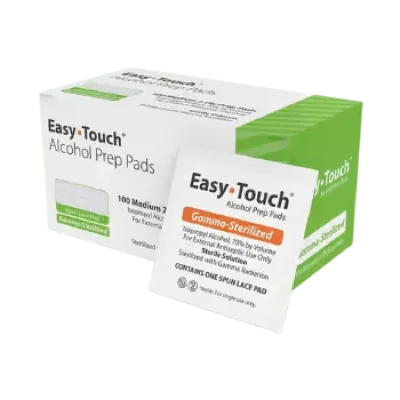
Quantities below assume an 8–12 week course of once-daily injections drawn from the combined 16 mg blend vial. At 1,600 mcg per day a single vial lasts about 10 days, so plan vial counts before starting rather than mid-cycle.
Protocol Overview
A concise summary of the once-daily regimen for the 16 mg tesamorelin-dominant blend, drawn from commonly cited reference protocols rather than from any approved dosing of this vial.
- ▪Goal: Investigate dual growth-hormone-axis stimulation and body-composition endpoints — a mechanistic hypothesis, not a validated outcome for this blend.
- ▪Schedule: Once daily, or 5 days on / 2 days off, across an 8–12 week cycle.
- ▪Dose range: 800–2,400 mcg of total blend per day depending on dilution, raised gradually; each dose stays locked at 81% tesamorelin / 19% ipamorelin.
- ▪Reconstitution: 3.0 mL (5.33 mg/mL) for the Standard column or 2.0 mL (8 mg/mL) for the Advanced column, per 16 mg blend vial.
- ▪Storage: Keep the dry vial at −20 °C (−4 °F); once mixed, refrigerate at 2–8 °C and do not freeze.
Dosing Protocol
A titration shape for the combined blend, based on the reference doses circulated for this vial format. The ratio is fixed by the manufacturer, so the only variable a researcher controls is the total volume drawn.
- ▪Start: Begin at 800 mcg of total blend once daily (Standard column) to gauge tolerability.
- ▪Titrate: Step up around week 5 — 800 → 1,600 mcg on the Standard dilution, or 1,600 → 2,400 mcg on the Advanced one.
- ▪Cycle length: Typically 8–12 weeks, then reassess before any further cycle.
- ▪Timing: Inject at a consistent time each day (evenings are the common convention) and rotate injection sites.
- ▪Reversibility: In the tesamorelin trials the visceral-fat reduction was lost quickly once participants were switched to placebo[2], and the reviewed evidence describes the same re-accumulation after discontinuation[4]. Nothing here is a one-time change.
Storage Instructions
Correct storage is what preserves the stability and activity of both peptides in the vial.
- ▪Lyophilized: Hold the dry blend vial at −20 °C (−4 °F) in dry, dark conditions and limit moisture exposure.
- ▪Reconstituted: Refrigerate at 2–8 °C (35.6–46.4 °F) and use within about 28 days; do not freeze the mixed solution.
- ▪Handling: Let a frozen vial reach room temperature before opening so condensation does not form, and keep the solution away from heat and direct light.
- ▪Freeze–thaw: Avoid repeated freeze–thaw cycles of the reconstituted solution.
Important Notes
Practical and safety points that matter specifically for a fixed-ratio blend vial.
- ▪You cannot separate the components: raising the tesamorelin exposure necessarily raises the ipamorelin exposure by the same proportion. If a protocol calls for adjusting one peptide independently, a blend vial is the wrong format for it.
- ▪Ratios vary by supplier: tesamorelin/ipamorelin vials are sold in several ratios (5+5, 10+3, 12+4, 13+3 and others). A dose chart written for one ratio is wrong for another — always re-derive the split from the vial actually in hand.
- ▪Volume tracking: the reconstitution volume alone sets the mcg per unit; record it on the vial so the total-blend dose stays accurate for the whole cycle.
- ▪Glucose and IGF-1: the tesamorelin label carries warnings for elevated IGF-1, fluid retention and glucose intolerance or new-onset diabetes[8], and IGF-1 rose substantially in the phase-3 dataset[1]. These are the parameters worth monitoring in any GH-axis work.
- ▪Malignancy: the approved tesamorelin product is contraindicated in active malignancy and in disruption of the hypothalamic-pituitary axis, and in pregnancy[8]. A research vial does not make those considerations disappear.
- ▪Sterile technique: use a fresh sterile U-100 insulin syringe each time and place it straight into a puncture-proof sharps container afterward.
- ▪Regulatory note: tesamorelin is FDA-approved only for HIV-associated lipodystrophy; ipamorelin is not approved anywhere. Both belong to the WADA class S2 prohibited group[9], and this blend is not approved for human use.
How This Works
Tesamorelin is a stabilized analog of growth-hormone-releasing hormone, GHRH(1–44). It binds pituitary GHRH receptors and drives the pituitary to release growth hormone in its natural pulsatile pattern, which in turn raises IGF-1. In the pooled phase-3 programme (806 participants with HIV-associated abdominal fat accumulation, 2 mg subcutaneously daily), visceral adipose tissue fell by a treatment effect of about 15% at 26 weeks while subcutaneous fat was essentially unchanged, and mean IGF-1 rose by roughly 108 ng/mL[1]. A separate 12-month randomized trial put the visceral-fat reduction near 18% at one year[2].
Ipamorelin comes through a different door. It is a pentapeptide (Aib-His-D-2-Nal-D-Phe-Lys-NH2) that activates the GHRP / GHS-R1a receptor, and it was the first compound in that class shown to release growth hormone with a selectivity comparable to GHRH itself — in swine it did not move ACTH or cortisol even at doses more than 200 times the ED50 for GH release[5]. That selectivity, rather than raw potency, is the argument for putting it in a blend.
The theoretical case for combining the two is real at the class level: growth-hormone secretagogues acting on the GHS receptor produce a GH response that is synergistic with GHRH, which is well documented for the GHRP family[7]. What has never been done is testing this pairing. There is no completed trial of tesamorelin plus ipamorelin, no published pharmacokinetics for the combination, and no evidence that a 13:3 ratio is better or worse than 1:1. Treat the synergy framing as a hypothesis carried over from related molecules.
Two further limits belong in the same paragraph. First, response is not uniform: in the phase-3 analysis only the participants who lost at least 8% of visceral fat showed the associated improvements in triglycerides, adiponectin and glucose homeostasis — non-responders did not[3]. Second, ipamorelin has essentially no human exposure data to lean on. The one published human study infused it intravenously in healthy men and found a terminal half-life of about 2 hours and a single episode of GH release peaking around 40 minutes before declining to negligible levels[6]. Subcutaneous, once-daily, multi-week ipamorelin use is an extrapolation, not a documented regimen.
Approval status, stated plainly: tesamorelin is approved, but only for reducing excess abdominal fat in HIV-associated lipodystrophy, and it remains the only agent indicated for that use[4]. The approved presentation is a kit — the current Egrifta SV formulation supplies a 2 mg vial reconstituted with 0.5 mL of diluent and dosed at 1.4 mg (0.35 mL) once daily, and the label warns that formulations are not interchangeable on a milligram basis[8]. A reconstituted grey-market blend vial is not that product. Ipamorelin is not approved in any jurisdiction. This page exists for research and educational use.
Lifestyle Factors
Nutrition: keep protein intake adequate and total calories aligned with the body-composition endpoint being studied; GH-axis work does not override energy balance.
Activity and rest: pair resistance training with genuine recovery time, since growth-hormone effects track with both the stimulus and the rest that follows it.
Sleep: aim for 7–9 hours. The largest natural GH pulses occur during slow-wave sleep, and short sleep blunts them.
Timing around carbohydrate: many reference protocols inject away from large carbohydrate meals, on the reasoning that elevated insulin dampens the GH pulse. This is a convention rather than a tested rule for this blend.
Glucose awareness: because the tesamorelin label flags glucose intolerance[8], diet quality and activity are not just performance variables here — they interact with the main documented risk.
Potential Benefits & Side Effects
What each half of the vial is known for, and what the combination has not been shown to do. Effects of the blend itself are not clinically established and individual response varies widely.
Reported Effects
- ▪Visceral fat (tesamorelin): in its approved indication, a treatment effect of about 15% visceral-fat reduction at 26 weeks and roughly 18% at 12 months, with subcutaneous fat preserved[1][2].
- ▪Metabolic markers, in responders only: participants who lost at least 8% of visceral fat saw lower triglycerides, higher adiponectin and better-preserved glucose homeostasis over 52 weeks; non-responders did not[3].
- ▪Selective GH pulse (ipamorelin): a GH release with no measurable rise in ACTH or cortisol in the original characterization[5].
- ▪Theoretical dual-axis synergy: plausible from GHRH + GHS class data[7], but never demonstrated for tesamorelin and ipamorelin together.
Common Side Effects
- ▪Injection-site reactions: redness, itching, pain or swelling are the most common complaints in the tesamorelin trials; rotating sites helps[1].
- ▪Fluid retention and joint symptoms: peripheral oedema, arthralgia and headache are the GH-typical adverse events reported with tesamorelin[4].
- ▪Glucose intolerance: the label warns about glucose intolerance and new-onset diabetes, alongside elevated IGF-1 and hypersensitivity reactions[8].
- ▪Neoplasm caution: the approved product is contraindicated in active malignancy and warns about neoplasm risk with sustained IGF-1 elevation[8].
- ▪Effects reverse: the visceral-fat benefit disappeared quickly when participants stopped[2].
- ▪Sport restriction: both peptides fall under WADA class S2 and are prohibited at all times[9].
Injection Technique
General subcutaneous technique. Nothing here is specific to the blend beyond one point: draw the total-blend volume, because the two peptides cannot be measured separately.
Pre-Injection Preparation
- ▪Wash your hands thoroughly with soap and water.
- ▪Wipe the vial stopper with an alcohol pad and let it air-dry.
- ▪Choose a site (abdomen, thigh or upper arm) and clean it with a fresh alcohol pad, letting it dry fully.
- ▪Draw the intended total-blend volume, then check for air bubbles and push them out.
Injection Procedure
- ▪Pinch a skinfold at the chosen site between thumb and forefinger.
- ▪Insert the needle into the pinch at a 45–90-degree angle (use 45 degrees where the fat layer is thin).
- ▪Aspiration is not needed for subcutaneous injections.
- ▪Press the plunger slowly and steadily until it is fully down.
- ▪Wait 5–10 seconds, then withdraw the needle straight out to prevent leakage.
Post-Injection Care
- ▪Place the used syringe directly into a puncture-proof sharps container — never recap a needle.
- ▪Return the reconstituted vial to the refrigerator right away.
- ▪Rotate the injection site each day to limit irritation and lipohypertrophy.
- ▪Watch the site for excess redness, swelling or any sign of infection.
Recommended Source
For high-purity research peptides, we point researchers to Prime Lab Peptides for Ipamorelin + Tesamorelin (16 mg Vial).
Why Prime Lab Peptides?
- ▪Top-rated on Trustpilot: Independently reviewed as the highest-rated peptide lab on Trustpilot — making it the best current source in the USA.
- ▪Third-party tested: Every batch ships with a Certificate of Analysis (COA) confirming purity and composition.
- ▪Consistent quality: ISO-aligned manufacturing and handling keep product integrity reliable batch to batch.
- ▪Cold-chain integrity: Temperature-controlled shipping and storage across the whole fulfilment chain.
- ▪Research-grade purity: Fit for educational and research use that demands high-quality peptides.
Note: Product availability and specifications subject to change. Verify current product details on supplier website.
References
- 1
J Clin Endocrinol Metab — Falutz et al., 2010 (pooled phase-3 analysis)Pooled analysis of two phase-3 trials, 806 participants, tesamorelin 2 mg SC daily: visceral fat treatment effect about −15% at 26 weeks, IGF-1 +108 ng/mL, reduction maintained to 52 weeks.
- 2
J Acquir Immune Defic Syndr — Falutz et al., 2010 (12-month randomized trial)Visceral fat fell 10.9% vs 0.6% on placebo at 6 months and about 18% at 12 months; the gains were rapidly lost in participants switched from tesamorelin to placebo.
- 3
Clin Infect Dis — Stanley et al., 2012 (responders vs non-responders)Only participants with at least an 8% visceral-fat reduction showed improved triglycerides, adiponectin and preserved glucose homeostasis over 52 weeks.
- 4
Drugs — Dhillon, 2011 (tesamorelin review)Review of tesamorelin: the first and only treatment indicated for reducing excess abdominal fat in HIV-associated lipodystrophy; visceral fat re-accumulates after therapy is stopped.
- 5
Eur J Endocrinol — Raun et al., 1998 (ipamorelin characterization)Ipamorelin described as the first selective growth hormone secretagogue: a pentapeptide acting at the GHRP receptor that released GH without raising ACTH or cortisol.
- 6
Pharm Res — Gobburu et al., 1999 (ipamorelin human PK/PD)Dose-escalation study in healthy male volunteers using 15-minute intravenous infusions: terminal half-life about 2 hours and a single GH release peaking near 0.67 hours.
- 7
Ann Med — Ghigo et al., 1998 (GH secretagogue review)Review of growth hormone secretagogues, including the finding that their effect on GH release is synergistic with that of GHRH.
- 8
DailyMed — EGRIFTA SV (tesamorelin) prescribing informationFDA label: 2 mg vial reconstituted with 0.5 mL, dosed 1.4 mg (0.35 mL) subcutaneously once daily; contraindications include active malignancy and pregnancy; warnings cover IGF-1 elevation, fluid retention and glucose intolerance.
- 9
WADA — Prohibited List (class S2, peptide hormones and growth factors)Growth hormone secretagogues, including GHRH analogs and ghrelin / GHS-R1a agonists, are prohibited at all times under class S2.
Ipamorelin + Tesamorelin — frequently asked questions
How do I reconstitute a 16 mg vial of Ipamorelin + Tesamorelin?
Wipe the stopper with an alcohol swab, then inject your bacteriostatic water slowly down the inside wall of the vial. Let it sit and gently swirl until dissolved — never shake. Store the mixed vial in the refrigerator and draw doses with an insulin syringe. Use the calculator above to turn any dose into syringe units.
How much bacteriostatic water should I add to Ipamorelin + Tesamorelin?
There is no single correct amount — more water simply spreads the same 16 mg of peptide across a larger volume, which makes small doses easier to measure accurately. 1 to 3 mL per vial is typical. Enter your chosen volume in the calculator above to see the resulting concentration and syringe units.
What do the "units" on an insulin syringe mean?
On a U-100 insulin syringe, 100 units equal 1 mL, so 1 unit equals 0.01 mL. The calculator above converts your draw volume into these units automatically so you can measure without doing the math by hand.
How should I store Ipamorelin + Tesamorelin after mixing?
Keep the reconstituted vial refrigerated at roughly 2 to 8 degrees Celsius, away from light, and avoid freezing it. Reconstituted research peptides are generally used within a few weeks. Always follow the specific guidance supplied with your product.
How many doses does a 16 mg vial of Ipamorelin + Tesamorelin provide?
Divide the vial strength of 16 mg by the amount you use per injection. The calculator above reports this as "doses per vial" the moment you enter a dose.
Is Ipamorelin + Tesamorelin approved for human use?
No. Ipamorelin + Tesamorelin is sold strictly for laboratory and research purposes and is not approved by the FDA or other regulators for human use. Everything on this page is research information, not medical advice — consult a licensed healthcare professional before any use.
New protocols & dosing updates
Reconstitution charts, new peptide protocols and safety updates — straight to your inbox. No spam, unsubscribe anytime.