

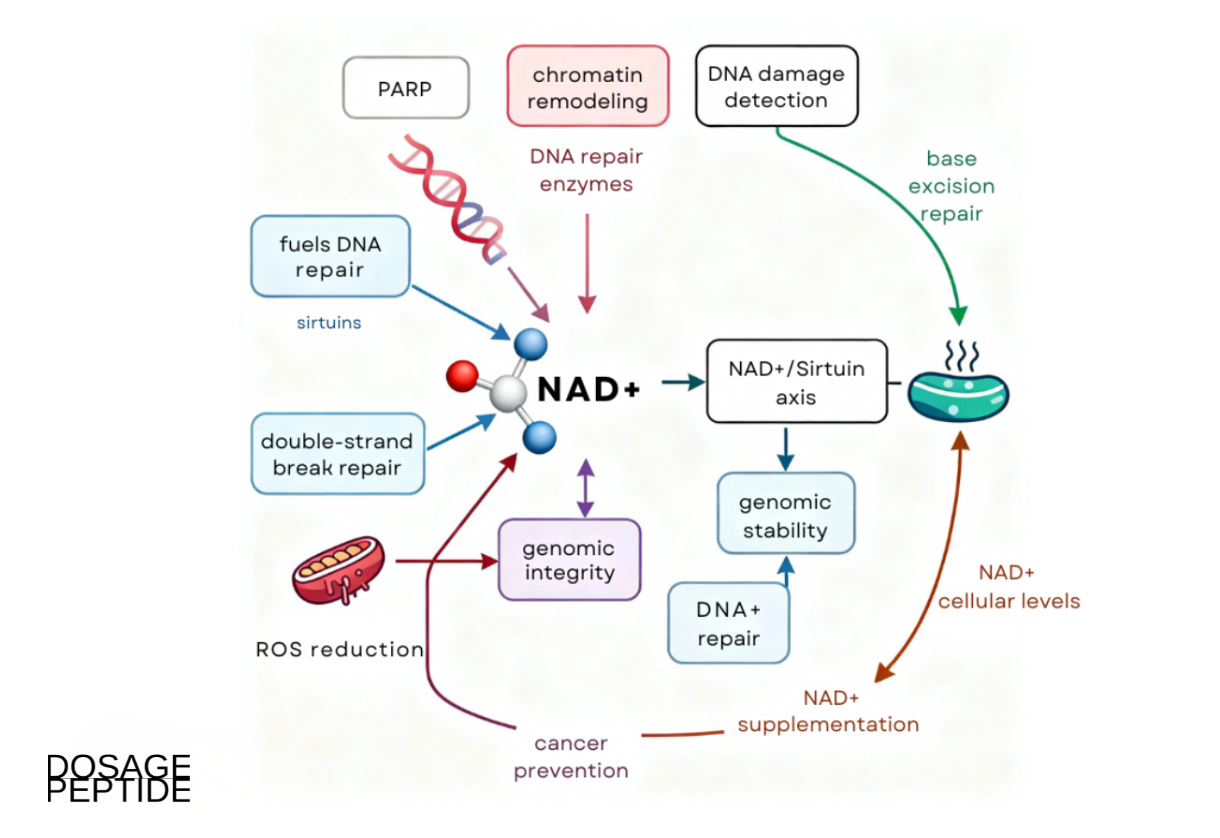
A single burst of DNA damage can drain up to 90% of a cell’s NAD⁺[1] reserves, revealing just how fiercely this molecule defends our genetic code. Acting as the cell’s lifeline for repair, NAD⁺ energizes enzymes like PARP and sirtuins to mend DNA, preserve genomic stability, and protect against the cascade of mutations that can lead to cancer. This remarkable defense system makes NAD⁺ a powerful ally in promoting cellular longevity and preventing cancer.
At Dosage Peptide, we explore the scientific pathways involved in NAD⁺ regulation, cellular repair mechanisms, and healthy aging research through evidence-based peptide discussions and educational resources. Our research-focused approach highlights emerging findings related to DNA repair, mitochondrial function, and cellular resilience while emphasizing scientific accuracy, formulation consistency, and ongoing peptide innovation.
What Is NAD+ and Its Role in Maintaining Cellular Health?
NAD⁺ is a vital coenzyme that powers cellular energy production, supports DNA repair, and regulates essential metabolic processes. Notably, research indicates[2] that NAD+ levels decline with age, resulting in increased vulnerability to genomic instability. In fact, a study reported that cells with diminished NAD+ show marked impairment in repairing DNA damage, a key driver of cancer development. NAD+ serves several crucial roles:
- Energy Metabolism: NAD+ shuttles electrons in metabolic processes, fueling every living cell.
- Redox Reactions: It maintains cellular redox balance, which is vital for controlling reactive oxygen species (ROS).
- Cell Signaling: NAD+ participates in signaling pathways that influence cell survival and stress responses.
Maintaining steady NAD⁺ levels is crucial for protecting genomic integrity and preventing disease. Researchers emphasize that boosting NAD⁺ availability may support healthy aging and help slow the progression of age-related conditions, including cancer.
How Does NAD+ Support DNA Repair Pathways?
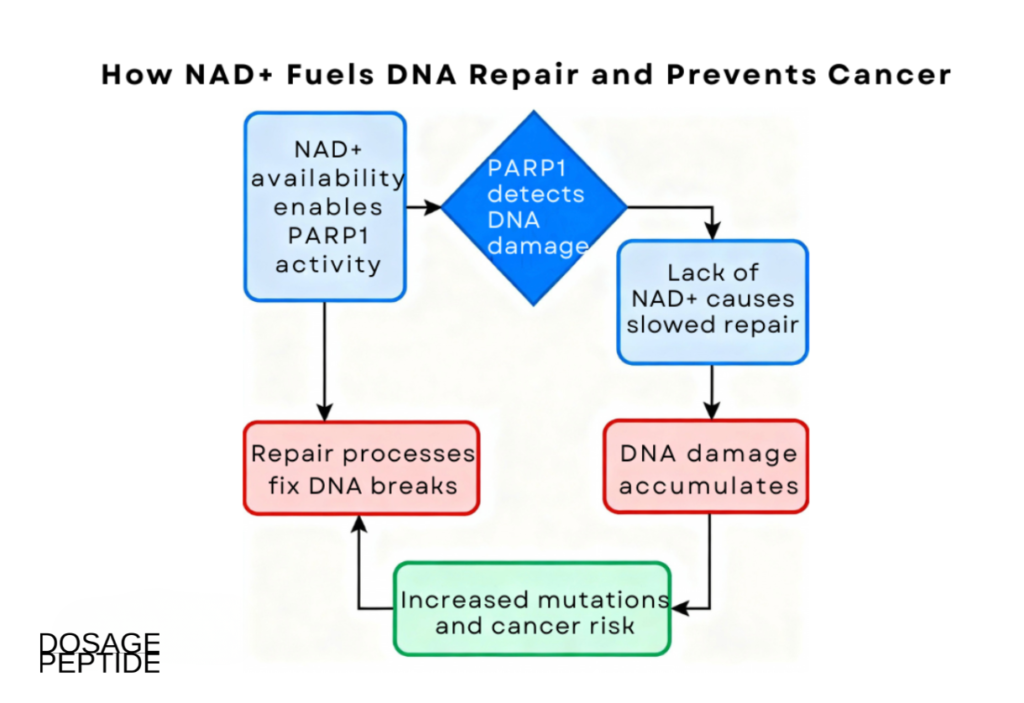
NAD⁺ supports DNA repair pathways[3] by energizing enzymes such as PARPs that identify and repair damaged DNA. This crucial function preserves genomic stability, prevents mutation accumulation, and protects cells from aging-related deterioration and cancerous transformations, ensuring long-term cellular health and resilience.
Here’s how NAD⁺ actively strengthens the cell’s DNA repair system:
- Without adequate NAD⁺, PARP1 activity slows, thereby delaying double-strand break repair and allowing genetic damage to accumulate, which increases the risk of cellular dysfunction.
- Persistent DNA damage overwhelms the repair system when NAD⁺ is insufficient, leading to apoptosis or necrosis as the cell can no longer maintain genomic integrity.
- Lower NAD⁺ levels are strongly linked to elevated mutation rates and early cancer initiation, resulting from impaired DNA repair signaling and weakened cellular defense mechanisms.
What Is the NAD+/Sirtuin Axis and How Does It Prevent Genomic Instability?
The NAD⁺/sirtuin axis is a vital defense system that protects the genome[4] from instability and damage. Through NAD⁺ activation, sirtuin enzymes (SIRT1–SIRT7) perform precise DNA repair and maintain cellular balance. Moreover, this coordination reduces oxidative stress, strengthens resilience, and shields cells from mutation-driven diseases, including cancer.
This dynamic partnership operates through several powerful molecular actions:
1. Chromatin Remodeling
Sirtuins tighten chromatin structure around DNA, forming a protective barrier that reduces random strand breaks. This compact organization shields the genome and maintains efficient access for repair enzymes.
2. Deacetylation
By removing acetyl groups from DNA repair proteins, sirtuins enhance their activity and precision. This process accelerates the correction of DNA errors, ensuring rapid and coordinated cellular recovery.
3. Gene Regulation
Sirtuins activate key genes responsible for detecting DNA damage, responding to stress, and coordinating repair. Through this control, they maintain cellular health and prevent the accumulation of mutations.
Can NAD+ Mitigate Mitochondrial Dysfunction Linked to Cancer Risk?
Yes, NAD⁺ can effectively mitigate mitochondrial dysfunction[5] linked to cancer risk. It fuels mitochondrial energy production and activates mitophagy, the process that clears damaged mitochondria before they release harmful reactive oxygen species (ROS). This protective action prevents oxidative DNA damage, thereby preserving the stability of both the mitochondrial and nuclear genomes, which is essential for healthy cell function.
Additionally, elevated NAD⁺ levels stimulate mitochondrial biogenesis, rejuvenating the cell’s energy capacity and resilience. Research shows[6] that restoring NAD⁺ in aged cells reverses mitochondrial decline, reduces mutation accumulation, and enhances overall cellular longevity. Therefore, maintaining sufficient NAD⁺ levels not only strengthens energy metabolism but also lowers the risk of cancer driven by mitochondrial dysfunction.
Exploring NAD⁺ Pathways and Cellular Health Research with Dosage Peptide
Modern lifestyles, oxidative stress, and aging steadily deplete NAD⁺ levels. As a result, mitochondrial function weakens, DNA repair slows, and cellular resilience declines. This depletion accelerates fatigue, promotes genomic instability, and increases vulnerability to oxidative damage. Ultimately, low NAD⁺ levels disrupt energy production and speed up cellular aging.
At Dosage Peptide, we support peptide research through scientifically grounded discussions focused on NAD⁺ regulation, mitochondrial activity, cellular repair mechanisms, and healthy aging pathways. Our research-centered approach examines emerging evidence related to oxidative stress response, DNA repair, and cellular resilience while emphasizing scientific accuracy, formulation consistency, and evidence-based peptide innovation for the research community.
FAQs
How does NAD⁺ prevent cancer?
NAD⁺ fuels enzymes like PARPs and sirtuins that repair DNA and prevent mutation buildup. Maintaining genomic integrity reduces oxidative damage and lowers the risk of cancer development at the molecular level.
Why do NAD⁺ levels decline with age?
NAD⁺ levels drop due to increased oxidative stress, inflammation, and enzyme overactivation. This decline weakens DNA repair and mitochondrial function, accelerating aging and disease progression.
Can NAD⁺ supplements really restore cellular health?
Yes, restoring NAD⁺ through supplementation or peptides improves mitochondrial function, enhances DNA repair, and strengthens cellular defense, promoting vitality, resilience, and longevity, as supported by both scientific and clinical evidence.
How does Prime Lab Peptide help boost NAD⁺ naturally?
Prime Lab Peptide uses advanced, research-backed formulations that elevate NAD⁺ levels, enhance energy metabolism, support DNA repair, and protect cells from oxidative damage, promoting long-term cellular health and optimal aging.
References
- Goldman Laboratories Team. (n.d.). NAD⁺ for DNA repair: Hidden mechanisms behind cellular longevity. Goldman Laboratories. Retrieved October 13, 2025, from https://goldmanlaboratories.com/blogs/blog/nad-for-dna-repair
- Croteau, D. L., Rossi, M. L., Canugovi, C., Tian, J., & Bohr, V. A. (2017). NAD⁺ in DNA repair and mitochondrial maintenance. Mechanisms of Ageing and Development, 156, 46-54. https://doi.org/10.1016/j.mad.2016.12.005
- Xie, N., Zhang, L., Gao, W., Huang, C., Huber, P. E., Zhou, X., Li, C., Shen, G., & Zou, B. (2020). NAD⁺ metabolism: Pathophysiologic mechanisms and therapeutic potential. Signal Transduction and Targeted Therapy, 5, Article 227. https://doi.org/10.1038/s41392-020-00311-7
- Yaku, K., Okabe, K., Hikosaka, K., & Nakagawa, T. (2018). NAD metabolism in cancer therapeutics. Frontiers in Oncology, 8, 622. https://doi.org/10.3389/fonc.2018.00622
- Fang, E. F., Hou, Y., Lautrup, S., Jensen, M. B., Yang, B., SenGupta, T., Caponio, D., Khezri, R., Demarest, T. G., Aman, Y., Figueroa, D., Morevati, M., Lee, H.-J., Kato, H., Kassahun, H., Lee, J.-H., Filippelli, D., Okur, M. N., Mangerich, A., … Bohr, V. A. (2019). NAD⁺ augmentation restores mitophagy and limits accelerated aging in Werner syndrome. Nature Communications, 10(1), Article 5284. https://doi.org/10.1038/s41467-019-13172-8
- Kennedy, B. E., Saldanha, C., & Knudsen, E. (2016). NAD⁺ salvage pathway in cancer metabolism and therapy. Seminars in Cell & Developmental Biology, 52, 86-95. https://doi.org/10.1016/j.semcdb.2016.12.013