

Quickstart Highlights
Prostamax is a synthetic bioregulator tetrapeptide (Lys‑Glu‑Asp‑Pro) described as prostate‑tissue–specific in preclinical literature[1]. Short peptides can interact with DNA/chromatin and influence gene expression programs[2], and several ultrashort peptides show cellular uptake via peptide/amino‑acid transporters[3][4]. This educational protocol presents a once‑daily subcutaneous approach, drawing from daily parenteral schedules in animal studies and general best practices for subcutaneous peptide delivery.
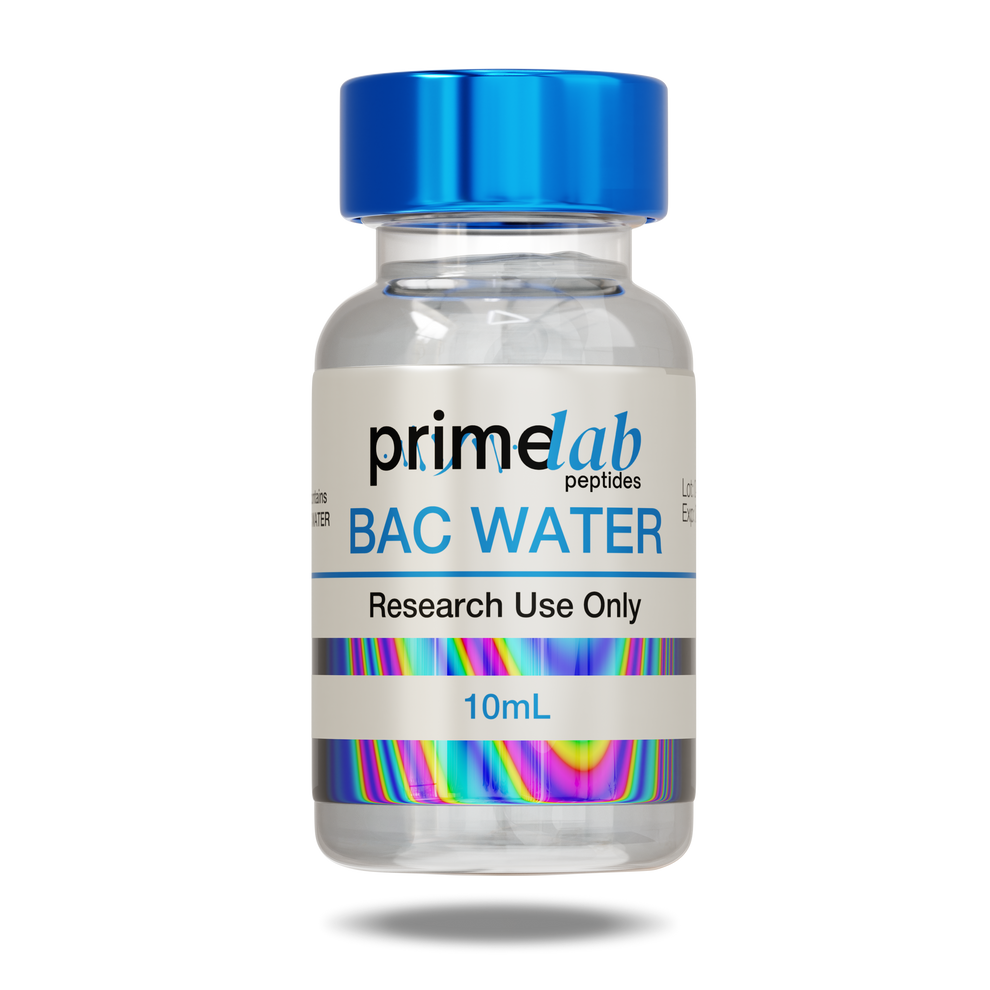
- Reconstitute: Add 3.0 mL bacteriostatic water → concentration ≈ 6.67 mg/mL. At this dilution, 1 unit = 0.01 mL ≈ 66.7 mcg on a U‑100 insulin syringe.
- Suggested daily titration range (educational): 500–3000 mcg once daily with gradual increases, reflecting daily parenteral use in preclinical work and typical SC tolerability limits[1][7].
- Storage: Keep lyophilized vials cold (e.g., −20 °C [−4 °F]) and protected from light; after reconstitution, refrigerate at 2–8 °C (35.6–46.4 °F); avoid repeated freeze–thaw cycles[11][12][13].

 Important: Before viewing any protocol, please consult our Prep & Injection Guide for essential preparation and safety instructions.
Dosing & Reconstitution Guide
Educational guide for reconstitution and daily dosing
Route & Frequency: Inject once daily by the subcutaneous route. Animal data with Prostamax used daily parenteral dosing (intramuscular injections) for 15 days[1]. Subcutaneous administration is widely used for peptide therapeutics, and volumes up to ~3.0 mL in the abdomen are generally well tolerated in adults[7].
Standard / Gradual Approach (3.0 mL → ~6.67 mg/mL)
| Week | Daily Dose (mcg) | Units (per injection) (mL) |
|---|---|---|
| Weeks 1–2 | 500 mcg | 7.5 units (0.08 mL) |
| Weeks 3–4 | 1000 mcg | 15 units (0.15 mL) |
| Weeks 5–6 | 2000 mcg | 30 units (0.30 mL) |
| Weeks 7–12 | 3000 mcg | 45 units (0.45 mL) |
Measuring notes: 20 mg ÷ 3.0 mL = 6.67 mg/mL → 6667 mcg/mL. On a U‑100 syringe, 1 unit = 0.01 mL ≈ 66.7 mcg. For ≤10‑unit (≤0.10 mL) administrations, consider 30‑ or 50‑unit insulin syringes for improved readability.
Reconstitution Steps
- Using aseptic technique, draw 3.0 mL bacteriostatic water for injection (multi‑dose diluent with benzyl alcohol)[11].
- Inject slowly down the vial wall; allow the powder to dissolve fully (gently swirl; do not shake).
- Label the vial and store at 2–8 °C (35.6–46.4 °F); avoid freeze–thaw cycling[12][13].
Supplies Needed
Planning estimates for 8–16 weeks of once‑daily subcutaneous injections (units/day × days; vials rounded up; bacteriostatic water equals reconstitution volume × vials).
- Peptide Vials (Prostamax, 20 mg each):
- 8 weeks ≈ 5 vials
- 12 weeks ≈ 9 vials
- 16 weeks ≈ 13 vials
- Insulin Syringes (U‑100):
- Per week: 7 (1/day)
- 8 weeks: 56
- 12 weeks: 84
- 16 weeks: 112
- Bacteriostatic Water (10 mL bottles): Use ~3.0 mL per vial.
- 8 weeks (5 vials): 15 mL → 2 × 10 mL bottles
- 12 weeks (9 vials): 27 mL → 3 × 10 mL bottles
- 16 weeks (13 vials): 39 mL → 4 × 10 mL bottles
- Alcohol Swabs: One for the vial stopper and one for the injection site daily.
- Per week: 14 swabs (2/day)
- 8 weeks: 112
- 12 weeks: 168
- 16 weeks: 224
" /></div>)


Protocol Overview
Concise summary of the once‑daily regimen.
- Goal: Educational framework to explore prostate‑tissue support signals observed in preclinical models (reduced inflammatory and fibrotic markers)[1].
- Schedule: Daily subcutaneous injections for 8–12 weeks (optional extension to 16 weeks).
- Dose Range: 500–3000 mcg daily with gradual titration.
- Reconstitution: 3.0 mL per 20 mg vial (~6.67 mg/mL) for clear syringe conversions.
- Storage: Lyophilized at −20 °C (−4 °F); reconstituted at 2–8 °C (35.6–46.4 °F); minimize freeze–thaw[12][13].
Dosing Protocol
Suggested daily titration approach with cautious evidence framing.
- Start: 500–1000 mcg once daily; increase by ~500–1000 mcg every 1–2 weeks as tolerated.
- Target: 2000–3000 mcg once daily by Weeks 5–8.
- Rationale: Aligns with daily parenteral schedules in animal data and SC volume tolerability in adults[1][7].
- Timing: Any consistent time of day; rotate injection sites.
Storage Instructions
Proper storage preserves peptide quality.
Important Notes
Practical considerations for consistency and safety.
- Use new sterile insulin syringes; dispose in an approved sharps container.
- Rotate injection sites (abdomen, thighs, upper arms) to minimize lipohypertrophy and variability in absorption[14][16].
- Subcutaneous technique: insert at 45° into subcutaneous tissue; aspiration is not required[5][6].
- Follow WHO/NCBI injection best‑practice guidance for asepsis and preparation[8].
How This Works
Prostamax (Lys‑Glu‑Asp‑Pro) is reported to be prostate‑tissue–specific in animal models[1]. Short peptides may directly interact with nucleosomal DNA and regulatory proteins, modulating transcriptional programs[2]. Multiple ultrashort peptides demonstrate transporter‑mediated cellular uptake (e.g., LAT, PEPT families)[3][4]. Select Khavinson‑family peptides have shown anti‑inflammatory cytokine modulation in immune models (e.g., reduced TNF‑α/IL‑6 signaling)[10].
Lifestyle Factors
Complementary strategies for best outcomes (general health guidance).
- Balanced, protein‑forward nutrition matched to energy needs.
- Combine resistance and aerobic activity to support metabolic health.
- Prioritize sleep and stress management for adherence and recovery.
Potential Benefits & Side Effects
Highlights from preclinical and mechanistic literature (human clinical data remain limited).
- Potential benefits (preclinical): Reduced histologic markers of chronic prostatic inflammation and sclerosis in a rat model with daily parenteral dosing[1].
- Mechanistic signals: Short peptides can influence gene expression and may attenuate pro‑inflammatory cytokine signaling in immune systems[2][10].
- Tolerability: For subcutaneous injections in adults, per‑dose volumes up to ~3.0 mL in the abdomen are generally well tolerated; larger volumes can increase pain/discomfort[7].
- Local reactions: Mild injection‑site redness/itch/tenderness may occur; rotate sites to reduce risk of lipohypertrophy and tissue irritation[14][16].
Injection Technique
Subcutaneous administration pointers from reputable sources.
- Clean stopper and skin with alcohol; allow to dry (aseptic technique per WHO/NCBI guidance)[8].
- Pinch skinfold; insert the needle at 45° into subcutaneous tissue; inject slowly and steadily[5][6].
- Do not aspirate for subcutaneous injections[5][6].
- Rotate sites systematically (abdomen, thighs, upper arms) to minimize lipohypertrophy and absorption variability[14][16].
Recommended Source
We recommend Prime Lab Peptides for Prostamax (20 mg).
Why Prime Lab Peptides?
- High‑purity batches with third‑party documentation.
- Consistent handling and quality controls.
- Reliable fulfillment with clear product specifications.
Important Note
This content is intended for therapeutic educational purposes only and does not constitute medical advice, diagnosis, or treatment.
References
-
Modern Research in Inflammation (2013)
— Rat model of chronic aseptic prostatitis: Prostamax (Lys‑Glu‑Asp‑Pro) daily IM (20 µg/kg) reduced inflammatory and fibrotic markers. -
Molecules (2021)
— Systematic review: short peptides (≤7 aa) can enter nuclei and interact with DNA/chromatin to regulate gene expression. -
Int. J. Mol. Sci. (2022)
— Review of ultrashort‑peptide transport via POT/LAT transporters across tissues. -
Biomedicines (2023)
— Transport feasibility of 26 ultrashort peptides via LAT/PEPT carriers (modeling and docking). -
CDC — Vaccine Administration (2025)
— Subcutaneous route technique (angle/site); aspiration not required. -
CDC (2024) — Subcutaneous Injection PDF
— Visual guidance for subcutaneous injections; no aspiration. -
J. Pharm. Sci. (2019)
— Subcutaneous injection: factors and tolerated volumes; up to ~3 mL in abdomen generally well tolerated. -
NCBI Bookshelf (WHO)
— Best practices for injections: aseptic prep, administration steps, safe handling. -
DailyMed — Bacteriostatic Water for Injection (USP)
— Official label: multi‑dose diluent with benzyl alcohol for drug reconstitution. -
Int. J. Mol. Sci. (2022)
— Khavinson peptides modulate inflammatory cytokines (THP‑1 models; TNF‑α/IL‑6). -
DailyMed — Bacteriostatic Water (PDF label)
— Composition and use as diluent; handling cautions. -
Pharmaceutics (2024)
— Practical guidance for lyophilized protein drug products; stability of reconstituted solutions often studied at 2–8 °C. -
Pharmaceutics (2025)
— Regulatory/stability overview for biologics: common storage at 2–8 °C; long‑term at sub‑zero as appropriate. -
Diabetes Spectrum (2019)
— Injection technique: rotate SC sites to prevent lipohypertrophy and absorption variability. -
Prime Lab Peptides
— Prostamax (20 mg) product page (supplier/specs). -
NCBI Bookshelf — Endotext (2023)
— Insulin administration: site selection and rotation principles relevant to SC injections.