

Quickstart Highlights
Ovagen is described in the scientific literature as an ultra‑short regulatory peptide; ultra‑short peptides can modulate gene expression and cellular programs, including in epithelial and parenchymal tissues[1][2]. Hepatoprotective peptide research (class‑level) suggests peptides may help support hepatocyte resilience and redox balance in preclinical systems[4][5][7]. This educational protocol standardizes a once‑daily subcutaneous framework using a practical dilution and clear insulin‑syringe math; subcutaneous administration is a common route for peptide therapeutics and enables slow, sustained absorption[8][12][14].
- Reconstitute: Add 3.0 mL bacteriostatic water (max vial capacity) → ~6.67 mg/mL concentration.
- Typical daily range: 800–2000 mcg once daily (gradual titration).
- Easy measuring: At 6.67 mg/mL, 1 unit = 0.01 mL ≈ 66.7 mcg on a U‑100 insulin syringe.
- Storage: Lyophilized: freeze at −20 °C (−4 °F); after reconstitution, refrigerate at 2–8 °C (35.6–46.4 °F); avoid freeze–thaw cycles (general biopharm guidance)[16].

 Important: Before viewing any protocol, please consult our Prep & Injection Guide for essential preparation and safety instructions.
Dosing & Reconstitution Guide
Educational guide for reconstitution and daily dosing
Standard / Gradual Approach (3 mL = ~6.67 mg/mL)
| Week | Daily Dose (mcg) | Units (per injection) (mL) |
|---|---|---|
| Weeks 1–2 | 800 mcg | 12 units (0.12 mL) |
| Weeks 3–4 | 1200 mcg | 18 units (0.18 mL) |
| Weeks 5–6 | 1600 mcg | 24 units (0.24 mL) |
| Weeks 7–12 | 2000 mcg | 30 units (0.30 mL) |
Route & Frequency: Inject once daily subcutaneously. Subcutaneous delivery is widely used for peptide and protein therapeutics and provides gradual systemic exposure[8][13][14]. This schedule uses the largest practical dilution (3.0 mL) to keep per‑injection volumes at or above ~10 units for readability. If a lower individual dose ever falls under ~10 units (≤0.10 mL), consider using 30‑ or 50‑unit insulin syringes for improved readability.
Reconstitution Steps
- Draw 3.0 mL bacteriostatic water with a sterile syringe.
- Inject slowly down the vial wall; avoid foaming.
- Gently swirl/roll until dissolved (do not shake).
- Label and refrigerate at 2–8 °C (35.6–46.4 °F), protected from light[16].
Supplies Needed
Plan based on an 8–16 week once‑daily protocol with gradual titration.
- Peptide Vials (Ovagen, 20 mg each):
- 8 weeks ≈ 4 vials
- 12 weeks ≈ 7 vials
- 16 weeks ≈ 10 vials
- Insulin Syringes (U‑100):
- Per week: 7 syringes (1/day)
- 8 weeks: 56 syringes
- 12 weeks: 84 syringes
- 16 weeks: 112 syringes
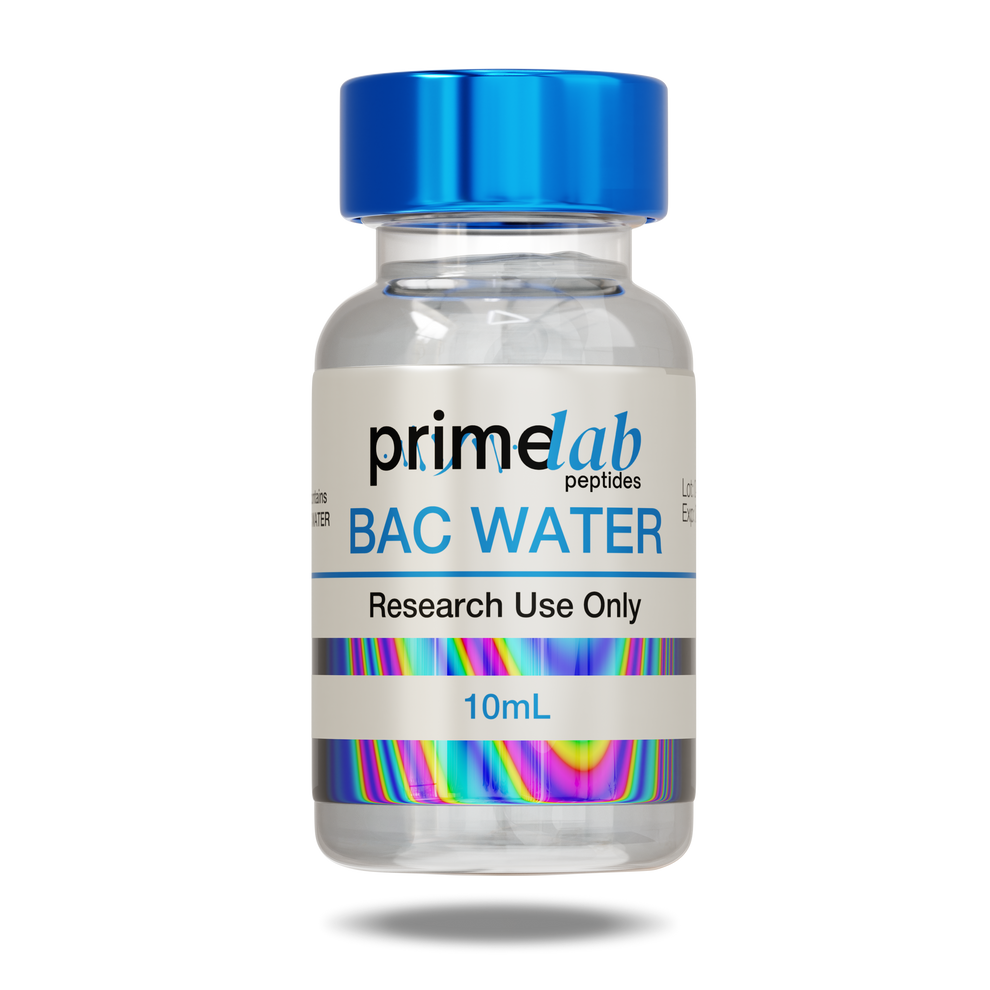
- Bacteriostatic Water (10 mL bottles): Use ~3.0 mL per vial for reconstitution.
- 8 weeks (4 vials): 12 mL → 2 × 10 mL bottles
- 12 weeks (7 vials): 21 mL → 3 × 10 mL bottles
- 16 weeks (10 vials): 30 mL → 3 × 10 mL bottles
- Alcohol Swabs: One for the vial stopper + one for the injection site each day.
- Per week: 14 swabs (2/day)
- 8 weeks: 112 swabs → recommend 2 × 100‑count boxes
- 12 weeks: 168 swabs → recommend 2 × 100‑count boxes
- 16 weeks: 224 swabs → recommend 3 × 100‑count boxes
" /></div>)


Protocol Overview
Concise summary of the once‑daily regimen.
- Goal: Provide an educational, standardized approach to measuring and administering small peptide volumes subcutaneously; ultra‑short peptides have been reported to influence gene expression and cell‑stress programs[1][2].
- Schedule: Daily subcutaneous administrations for 8–12 weeks (extend to 16 weeks as needed), aligned with common SC delivery paradigms for peptide therapeutics[8][14].
- Dose Range: 800–2000 mcg daily with gradual titration.
- Reconstitution: 3.0 mL per 20 mg vial (~6.67 mg/mL) for accurate unit measurements.
- Storage: Lyophilized frozen; reconstituted refrigerated; avoid repeated freeze–thaw cycles (general lyophilized biologic guidance)[16].
Dosing Protocol
Suggested daily titration approach using a single SC administration.
- Start: 800–1000 mcg daily; increase by ~200–400 mcg every 1–2 weeks as tolerated.
- Target: 1600–2000 mcg daily by Weeks 5–12.
- Frequency: Once per day (subcutaneous), a route that provides gradual systemic exposure[12].
- Cycle Length: 8–12 weeks; optional extension to 16 weeks.
- Timing: Any consistent time; rotate injection sites.
Storage Instructions
Proper storage preserves peptide quality.
Important Notes
Practical considerations for consistency and safety.
- Use new sterile insulin syringes; dispose in a sharps container.
- Rotate injection sites (abdomen, thighs, upper arms) to reduce local irritation and lipohypertrophy[9][10].
- Inject slowly; aspiration is not recommended for subcutaneous injections per public‑health guidance[9][10].
- Document daily dose and site rotation to maintain consistency.
How This Works
Ultra‑short peptides (USPs) can enter cells via peptide transporters (e.g., POT/LAT families) and act as epigenetic modulators of gene expression, influencing protein synthesis and cellular stress responses[1][2]. Tripeptides studied in vivo and in vitro demonstrate sequence‑specific bioactivity on cell survival pathways and plasticity, supporting the plausibility of targeted USP actions[3]. Independently, a growing body of hepatoprotective‑peptide literature shows peptides can mitigate liver injury and fibrosis markers in models, though translation to defined clinical protocols varies by molecule and study[4][5][7].
Lifestyle Factors
Complementary strategies for best outcomes.
- Pair with a balanced, protein‑forward diet tailored to energy needs.
- Combine resistance training and aerobic activity to reinforce metabolic and hepatic health.
- Prioritize sleep and stress management to support adherence and recovery.
Potential Benefits & Side Effects
Evidence signals from broader peptide research (class‑level), not product‑specific claims.
Potential Benefits (Reported in Literature)
- Peptide literature reports modulation of cellular stress/antioxidant pathways and reduced hepatocellular injury markers in models (magnitude varies by system)[4][5][7].
- General SC administration is associated with slow absorption and is commonly used for peptide biologics[8][14][15].
- Local injection‑site reactions (transient redness/itch) can occur with subcutaneous techniques; rotate sites and follow public‑health administration guidance[9][10].
Potential Side Effects
- High doses can produce adverse reactions such as insomnia, anxiety, or fatigue if escalated too quickly; gradual titration is advised[4].
- Mild injection‑site reactions (redness, itching, soreness) may occur with subcutaneous administration; typically resolve with site rotation.
- Some individuals report transient headache or flushing; these effects are generally dose‑dependent.
- Doses exceeding ~200–300 mg/day should generally be reserved for supervised therapeutic use due to potential for metabolic byproduct accumulation[15].
Injection Technique
- Clean the vial stopper and skin with alcohol; allow to dry.
- Pinch a skinfold; insert the needle at 45–90° into subcutaneous tissue[9][10].
- Do not aspirate for subcutaneous injections; inject slowly and steadily[9].
- Rotate sites systematically (abdomen, thighs, upper arms) to avoid local tissue changes[9][11].
Recommended Source
We recommend Prime Lab Peptides for high‑purity Ovagen (20 mg).
Why Prime Lab Peptides?
- High‑purity, third‑party‑tested lots with batch COAs.
- Consistent, ISO‑aligned handling and documentation.
- Reliable fulfillment to maintain cold‑chain integrity.
Important Note
This content is intended for therapeutic educational purposes only and does not constitute medical advice, diagnosis, or treatment.
References
-
Peptide Regulation of Gene Expression (Systematic Review)
— Ultra‑short peptides as epigenetic modulators (mechanisms & evidence) -
Transport of Biologically Active Ultrashort Peptides
— POT/LAT transporters and cellular uptake of USPs -
Neuroprotective Effects of Tripeptides
— Sequence‑specific bioactivity of short peptides in vivo/in vitro -
Frontiers in Pharmacology
— Hepatoprotective & anti‑fibrotic peptide agents (review) -
Food Bioscience (2024)
— Recent advances of hepatoprotective peptides (overview) -
J. Agric. Food Chem. (2023)
— Protective effects of proteins/peptides on liver injury (review) -
Cienc. Tecnol. Aliment. (SciELO, 2022)
— Hepatoprotective effect of clam‑derived peptides in APAP injury model -
Subcutaneous Injection of Drugs (Review)
— Technique, absorption, and SC considerations -
CDC — During Vaccination
— Route/site guidance including SC administration -
CDC — Subcutaneous Injection (Fact Sheet)
— Angle/site technique and key steps -
NCBI Bookshelf
— Best practices for injection (asepsis, preparation, administration) -
StatPearls (2023)
— Medication routes of administration; SC absorption features -
Large‑Volume SC Injections (2024)
— Practical considerations for biotherapeutics via SC route -
Subcutaneous Administration of Biotherapeutics (Review)
— Rationale and advantages of SC delivery -
Pharmacokinetic Differences: SC vs. Other Routes (2024)
— PK considerations for proteins/peptides via SC -
Practical Advice in the Development of a Lyophilized Protein Drug Product (2024)
— General storage guidance for lyophilized biologics -
Prime Lab Peptides
— Ovagen (20 mg) product page (supplier link)