

Quickstart Highlights
Mechano Growth Factor (MGF) is the human IGF‑1Ec splice variant produced locally in response to mechanical loading and tissue injury; it has been explored predominantly in vitro and in animal models for roles in repair and cell activation.[1][2] This page provides an educational conversion framework for subcutaneous insulin‑syringe measurements using a practical dilution.
- Reconstitute: Add 3.0 mL bacteriostatic water → concentration ≈ 1.67 mg/mL.
- Illustrative per‑administration band (for unit conversions): 200–500 mcg (example values only; not a clinical recommendation).
- Easy measuring: At 1.67 mg/mL, 1 unit = 0.01 mL ≈ 16.7 mcg on a U‑100 insulin syringe.
- Storage: Follow supplier labeling; lyophilized stock is commonly kept frozen, and reconstituted solutions are typically refrigerated at 2–8 °C (35.6–46.4 °F).[14]

 Important: Before viewing any protocol, please consult our Prep & Injection Guide for essential preparation and safety instructions.
Dosing & Reconstitution Guide
Educational guide for reconstitution and daily dosing
Standard / Gradual Approach (3.0 mL → ~1.67 mg/mL)
Route: Subcutaneous; Frequency: once daily (measurement framework). Note: Human, evidence‑based dosing for subcutaneous MGF is not established; most literature involves local intramuscular, intracardiac, or systemic administration of MGF isoforms/E‑domain peptides in preclinical models.[1][3][4][5][6] Subcutaneous administration is a widely used route for many medicines in general, and the unit conversions below simply illustrate syringe math for a 5 mg vial.[7]
| Week | Daily Dose (mcg) | Units (per injection) (mL) |
|---|---|---|
| Weeks 1–2 | 200 mcg (0.20 mg) | 12 units (0.12 mL) |
| Weeks 3–4 | 300 mcg (0.30 mg) | 18 units (0.18 mL) |
| Weeks 5–6 | 400 mcg (0.40 mg) | 24 units (0.24 mL) |
| Weeks 7–12 | 500 mcg (0.50 mg) | 30 units (0.30 mL) |
Measuring note: At this 3.0 mL dilution, per‑injection volumes are ≥10 units for the example doses. For ≤10‑unit (≤0.10 mL) administrations, consider 30‑ or 50‑unit insulin syringes for improved readability.
Reconstitution Steps
- Draw 3.0 mL bacteriostatic water with a sterile syringe.
- Inject slowly down the vial wall; avoid foaming; gently swirl/roll to dissolve.
- Label the vial with date and concentration (~1.67 mg/mL).
- Refrigerate at 2–8 °C (35.6–46.4 °F); protect from light; avoid repeated freeze–thaw.[14]
Evidence context (important): The table above is a conversion aid for a 5 mg vial reconstituted to 3.0 mL. It is not a clinical recommendation. Published MGF literature is largely preclinical (e.g., muscle and cardiocerebral models) and uses local or systemic routes distinct from subcutaneous daily regimens.[1][3][4][5][6]
Supplies Needed
Plan based on the once‑daily illustrative schedule above.
- Peptide Vials (MGF, 5 mg each):
- 8 weeks ≈ 4 vials
- 12 weeks ≈ 7 vials
- 16 weeks ≈ 10 vials
- Insulin Syringes (U‑100):
- Per week: 7 syringes (1/day)
- 8 weeks: 56 syringes
- 12 weeks: 84 syringes
- 16 weeks: 112 syringes
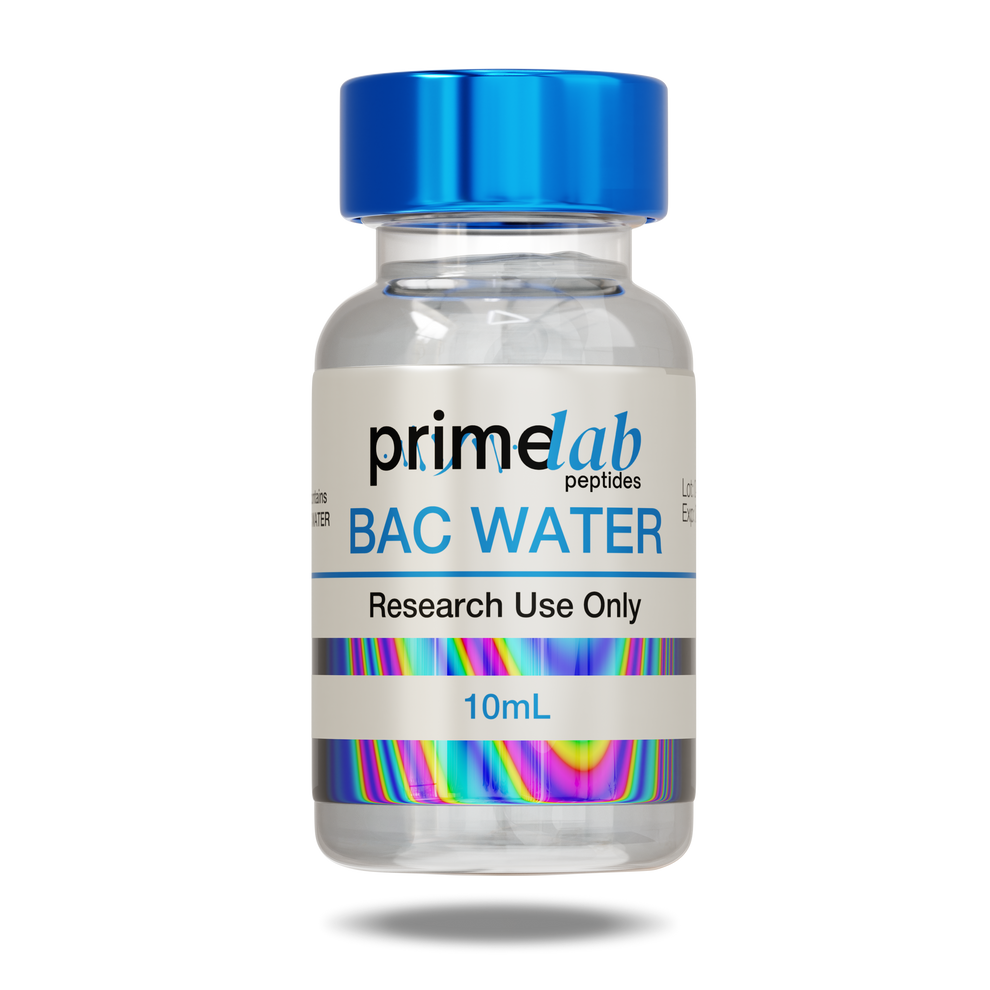
- Bacteriostatic Water (10 mL bottles): Use ~3.0 mL per vial.
- 8 weeks (4 vials): 12 mL → 2 × 10 mL bottles
- 12 weeks (7 vials): 21 mL → 3 × 10 mL bottles
- 16 weeks (10 vials): 30 mL → 3 × 10 mL bottles
- Alcohol Swabs: One for the vial stopper + one for the injection site each day.
- Per week: 14 swabs (2/day)
- 8 weeks: 112 swabs
- 12 weeks: 168 swabs
- 16 weeks: 224 swabs
" /></div>)


Protocol Overview
Concise summary of the once‑daily measurement framework.
- Concept: MGF (IGF‑1Ec) is locally expressed with mechanical stress and may influence repair and progenitor activation in preclinical systems.[1][3]
- Schedule: Example conversions shown for daily subcutaneous injections to keep syringe units readable (≥10 units) at 3.0 mL dilution; not evidence‑based dosing.[7]
- Reconstitution: 3.0 mL per 5 mg vial (~1.67 mg/mL) for clear U‑100 unit math.
- Documentation: Record date, concentration, and daily volumes for consistency.
Dosing Protocol (Illustrative)
Suggested titration purely for unit‑conversion practice (not a clinical recommendation).
Storage Instructions
Follow supplier labeling for lyophilized storage; after mixing, refrigerate and avoid repeated freeze–thaw.
Important Notes
How This Works
MGF (IGF‑1Ec) arises from alternative splicing of the IGF‑1 gene and exhibits distinct temporal expression and E‑domain biology in response to tissue loading and injury.[1][2][11] Preclinical and cell studies suggest E‑domain peptides can support progenitor activation and cytoprotection in muscle and neural models, while full‑length MGF can engage the IGF‑1 receptor in vitro; translation to standardized human dosing remains undefined.[3][5][7]
Lifestyle Factors
- Align nutrition with goals and maintain adequate protein to support recovery.
- Combine resistance and aerobic activity to reinforce adaptive signaling.
- Prioritize sleep and stress management to support adherence.
Potential Benefits & Side Effects
Preclinical/Mechanistic Signal (not clinical claims):
Injection Technique
Recommended Source
We recommend Prime Lab Peptides for high‑purity MGF (5 mg).
Why Prime Lab Peptides?
- High‑purity lots with batch documentation.
- Consistent handling and reliable fulfillment.
- Direct product page for current details and labeling.
Important Note
This content is intended for therapeutic educational purposes only and does not constitute medical advice, diagnosis, or treatment.
References
-
Hameed et al., J Physiol (2002/2003) — Human skeletal muscle expresses IGF‑1Ea and MGF; MGF upregulates after resistance exercise (age‑dependent).
-
Schlegel et al., PLoS ONE (2013) — IGF‑1Ec (MGF) characterization; isoform biology and E‑domain context.
-
Kandalla et al., Mech Ageing Dev (2011) — MGF E‑peptide activates human muscle progenitors; age‑related effects.
-
Peña et al., Biomaterials (2015) — Localized delivery of MGF E‑domain peptide improves cardiac function post‑MI (animal models).
-
Dluzniewska et al., FASEB J (2005) — Neuroprotective effects of MGF C‑terminal peptide in brain ischemia (animal model).
-
Owino et al., FEBS Lett (2001) — Age‑related inability to upregulate MGF after overload (rat).
-
Usach et al., J Clin Med (2019) — Subcutaneous injection of drugs: pharmacologic/technique review.
-
CDC (2024–2025) — Vaccine administration best practices; SC route angle/site; rotation; no aspiration.
-
CDC PDF (2024) — “Subcutaneous (Subcut) Injection” technique diagram; angle; no aspiration.
-
WHO / NCBI Bookshelf (2010) — Best practices for injections and related procedures.
-
Oberbauer, Front Endocrinol (2013) — Regulation of IGF‑1 gene transcription and splicing; isoform context.
-
Janssen et al., PLoS ONE (2016) — Full‑length MGF activates IGF‑1R in vitro; mechanistic insights.
-
Hill & Goldspink et al., J Physiol (2003) — Satellite cell activation related to IGF‑1 isoforms following local injury (context for MGF).
-
Prime Lab Peptides — MGF (5 mg) product page (supplier labeling/handling info).