

Quickstart Highlights
GHRP-2 (Growth Hormone-Releasing Peptide-2) is a synthetic hexapeptide that stimulates potent, dose-dependent growth hormone release by activating ghrelin receptors[1]. Clinical studies predominantly employ once-daily subcutaneous administration to elicit robust pulsatile GH release while minimizing receptor desensitization[2][3]. This educational protocol presents a practical gradual titration approach with clear insulin-syringe measurements.
- Reconstitute: Add 3.0 mL bacteriostatic water → ~1.67 mg/mL concentration.
- Typical daily range: 100–300 mcg once daily subcutaneously.
- Easy measuring: At 1.67 mg/mL, 1 unit = 0.01 mL ≈ 16.7 mcg on a U-100 insulin syringe.
- Storage: Lyophilized: freeze at −20 °C (−4 °F); after reconstitution, refrigerate at 2–8 °C (35.6–46.4 °F).

 Important: Before viewing any protocol, please consult our Prep & Injection Guide for essential preparation and safety instructions.
Dosing & Reconstitution Guide
Educational guide for reconstitution and daily dosing
Standard / Gradual Approach (3 mL = ~1.67 mg/mL)
| Week | Daily Dose (mcg) | Units (per injection) (mL) |
|---|---|---|
| Weeks 1–2 | 100 mcg | 6 units (0.06 mL) |
| Weeks 3–4 | 150 mcg | 9 units (0.09 mL) |
| Weeks 5–8 | 200 mcg | 12 units (0.12 mL) |
| Weeks 9–12 | 200 mcg | 12 units (0.12 mL) |
| Weeks 13–16 | 200 mcg | 12 units (0.12 mL) |
Frequency: Inject once daily subcutaneously. This once-daily schedule balances efficacy with receptor recovery time, avoiding the rapid attenuation seen with frequent dosing[3]. Administering in the evening may capitalize on nocturnal GH rhythms. For ≤10-unit (≤0.10 mL) administrations, consider 30- or 50-unit insulin syringes for improved readability.
Reconstitution Steps
- Draw 3.0 mL bacteriostatic water with a sterile syringe.
- Inject slowly down the vial wall; avoid foaming.
- Gently swirl or roll until completely dissolved (do not shake).
- Label and refrigerate at 2–8 °C (35.6–46.4 °F), protected from light.
Supplies Needed
Plan based on an 8–16 week daily protocol with gradual titration.
For Standard 10–20 Day Cycle
- Peptide Vials (GHRP-2, 5 mg each):
- 8 weeks ≈ 2 vials
- 12 weeks ≈ 4 vials
- 16 weeks ≈ 5 vials
- Insulin Syringes (U-100):
- Per week: 7 syringes (1/day)
- 8 weeks: 56 syringes
- 12 weeks: 84 syringes
- 16 weeks: 112 syringes
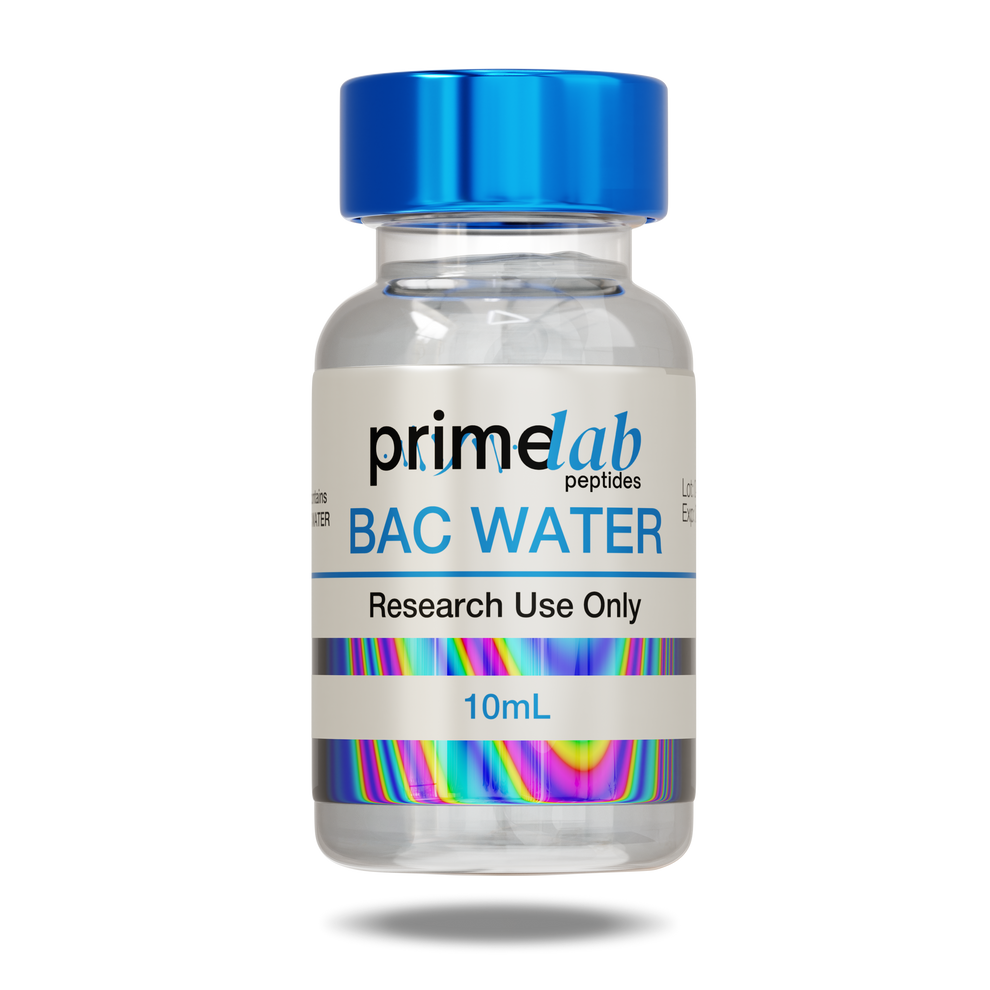
- Bacteriostatic Water (10 mL bottles): Use ~3.0 mL per vial for reconstitution.
- 8 weeks (2 vials): 6 mL → 1 × 10 mL bottle
- 12 weeks (4 vials): 12 mL → 2 × 10 mL bottles
- 16 weeks (5 vials): 15 mL → 2 × 10 mL bottles
- Alcohol Swabs: One for the vial stopper + one for the injection site each day.
- Per week: 14 swabs (2/day)
- 8 weeks: 112 swabs → recommend 2 × 100-count boxes
- 12 weeks: 168 swabs → recommend 2 × 100-count boxes
- 16 weeks: 224 swabs → recommend 3 × 100-count boxes
" /></div>)


Protocol Overview
Concise summary of the once-daily regimen.
- Goal: Stimulate endogenous growth hormone secretion through ghrelin receptor activation[1].
- Schedule: Daily subcutaneous injections for 8–12 weeks (extend to 16 weeks if desired).
- Dose Range: 100–300 mcg daily with gradual titration; higher doses show dose-dependent responses but may offer limited added benefit with routine use[4].
- Reconstitution: 3.0 mL per 5 mg vial (~1.67 mg/mL) for accurate unit measurements.
- Storage: Lyophilized frozen; reconstituted refrigerated (use within 2–3 weeks for optimal integrity).
Dosing Protocol
Suggested daily titration approach.
- Start: 100 mcg daily (Weeks 1–2); this starting dose provides strong GH pulse while allowing tolerance assessment.
- Mid-level: 150 mcg daily (Weeks 3–4) to enhance GH response if well tolerated.
- Target: 200 mcg daily (Weeks 5–16) for maximal effect in most research scenarios; advanced researchers may optionally increase to 250–300 mcg.
- Frequency: Once per day (subcutaneous); evening administration may align with nocturnal GH rhythms.
- Cycle Length: 8–16 weeks; some attenuation may occur in first 1–2 weeks but response stabilizes with continued dosing[3].
Storage Instructions
Proper storage preserves peptide potency.
- Lyophilized: Store at −20 °C (−4 °F) in dry, dark conditions; powder is stable at room temperature for short periods but freezer storage maximizes shelf life[8].
- Reconstituted: Refrigerate at 2–8 °C (35.6–46.4 °F); use within 2–3 weeks for optimal integrity[9]. For longer storage, consider aliquoting and freezing at −20 °C (−4 °F) with carrier protein; avoid repeated freeze–thaw cycles.
- Allow vials to reach room temperature before opening to reduce condensation uptake.
- Always protect from light and heat.
Important Notes
Practical considerations for consistency and safety.
- Use new sterile insulin syringes for each injection; dispose in a sharps container.
- Rotate injection sites (abdomen, thighs, upper arms) to reduce local irritation and prevent lipodystrophy[13].
- Very frequent dosing (e.g., every 2 hours) can cause progressive attenuation due to acute tachyphylaxis[3]; once-daily administration avoids this issue.
- Multiple daily injections (2–3×) have been explored but require strict adherence and may offer limited added benefit[5][6].
- Document daily dose and site rotation to maintain consistency.
How This Works
GHRP-2 is a synthetic growth hormone secretagogue that binds to and activates ghrelin (GH secretagogue) receptors[1]. This activation triggers potent, pulsatile release of growth hormone from the pituitary gland in a dose-dependent manner[4]. Clinical studies in GH-deficient children demonstrated meaningful GH increases even at low doses (0.3–3.0 mcg/kg), with escalating doses over several months showing sustained efficacy[2]. In healthy adults, doses of 100 mcg SC daily produce acute GH stimulation[3], while routine protocols typically maintain 100–300 mcg/day to balance efficacy with receptor sensitivity. The peptide has been well tolerated in clinical trials with no significant adverse effects or toxicity reported at these dosage ranges[2][7].
Potential Benefits & Side Effects
Observations from clinical and preclinical literature.
- Stimulates robust pulsatile GH release that may support favorable body composition changes and metabolic effects[1][2].
- In combination therapies (e.g., with GHRH analogs), can significantly increase IGF-1 levels when administered with perfect compliance[5][6].
- Generally well tolerated with placebo-like safety profile; transient side effects may include mild hunger sensation or flushing[7].
- Long-term therapy (8–24 months in GH-deficient subjects) has maintained positive effects on growth velocity with careful monitoring[2].
- Occasional mild injection-site reactions (redness, irritation) may occur with subcutaneous administration.
Lifestyle Factors
Complementary strategies for optimal outcomes.
- Maintain adequate protein intake and balanced nutrition to support the anabolic effects of elevated GH.
- Combine with resistance training to maximize body composition benefits.
- Prioritize sleep quality, as GH pulses naturally occur during deep sleep; evening administration may complement this rhythm.
- Manage stress effectively to support consistent adherence and recovery.
- Stay well hydrated to support metabolic processes.
Injection Technique
- Clean the vial rubber stopper and skin with alcohol swabs; allow to dry completely.
- Use a fine insulin syringe (typically 29–31 gauge, 0.5-inch needle).
- Pinch an inch of skin fat (abdomen, thigh, or outer upper arm); insert needle at 45° to 90° into subcutaneous tissue[11][12]. (Use 90° angle if ample fatty tissue; 45° for leaner individuals to avoid intramuscular injection.)
- Do not aspirate for subcutaneous injections—aspiration is unnecessary and can cause needless tissue trauma[11][12].
- Inject slowly and steadily; wait a few seconds before withdrawing needle at same angle.
- Apply gentle pressure with swab if needed; do not massage or rub injection site.
- Rotate sites systematically to prevent irritation and lipodystrophy—space injections at least 1 inch apart[13].
Recommended Source
We recommend Prime Lab Peptides for high-purity GHRP-2 (5 mg).
Why Prime Lab Peptides?
- High-purity, third-party-tested lots with batch certificates of analysis.
- Consistent, ISO-aligned handling and documentation standards.
- Reliable fulfillment processes to maintain cold-chain integrity.
- Transparent sourcing and quality assurance protocols.
Important Note
This content is intended for therapeutic educational purposes only and does not constitute medical advice, diagnosis, or treatment.
References
-
Domest Anim Endocrinol
— Effects of GHRP-2 on GH release and growth performance in swine (mechanism and receptor activation) -
J Clin Endocrinol Metab
— Effects of eight months treatment with graded doses of GHRP-2 in GH-deficient children -
Eur J Endocrinol
— Five-day treatment with daily subcutaneous GHRP-2: response attenuation and IGF-I effects in healthy young men -
Endocrine
— GH/IGF-1 response to acute and chronic GHRP-2, GHRH 1-44, and their combination in older adults -
Am J Men’s Health
— Growth hormone secretagogue treatment in hypogonadal men raises serum IGF-1 levels -
Sex Med Rev (PMC)
— The safety and efficacy of growth hormone secretagogues: comprehensive review -
Genaxxon Bioscience
— Product Information: Growth Hormone-Releasing Peptide-2 (GHRP-2), technical specifications -
Genaxxon Bioscience
— Storage and stability guidelines for research peptides (lyophilized storage recommendations) -
Genaxxon Bioscience
— Reconstituted peptide storage: refrigeration and stability considerations -
Nurseslabs
— Subcutaneous administration technique: comprehensive nursing guide -
Medicine LibreTexts (BCcampus)
— Intradermal and subcutaneous injections: clinical procedures for safer patient care -
Chartwell Pennsylvania
— Administering medication via subcutaneous injection: patient teaching guide -
Medicine LibreTexts (BCcampus)
— Site rotation and lipodystrophy prevention in subcutaneous injections -
Prime Lab Peptides
— GHRP-2 (5 mg) product page (quality documentation and batch COAs)