

Quickstart Highlights
Delta Sleep-Inducing Peptide (DSIP) is a naturally occurring nonapeptide (9 amino acids) first isolated from rabbit brain tissue and studied for its effects on sleep architecture and stress modulation[1][2]. Research indicates DSIP may promote delta-wave (slow-wave) sleep, modulate cortisol and ACTH levels, and exhibit stress-protective properties[3][4]. This educational protocol presents a once-daily subcutaneous approach using a practical dilution for clear insulin-syringe measurements.
- Reconstitute: Add 3.0 mL bacteriostatic water → ~1.67 mg/mL concentration.
- Typical daily range: 100–300 mcg once daily (gradual titration); advanced up to 500 mcg.
- Easy measuring: At 1.67 mg/mL, 1 unit = 0.01 mL ≈ 16.7 mcg on a U-100 insulin syringe.
- Storage: Lyophilized: freeze at −20 °C (−4 °F); after reconstitution, refrigerate at 2–8 °C (35.6–46.4 °F); avoid freeze–thaw cycles.

 Important: Before viewing any protocol, please consult our Prep & Injection Guide for essential preparation and safety instructions.
Dosing & Reconstitution Guide
Educational guide for reconstitution and daily dosing
Standard / Gradual Approach (3 mL = ~1.67 mg/mL)
| Week | Daily Dose (mcg) | Units (per injection) (mL) |
|---|---|---|
| Week 1 | 100 mcg | 6 units (0.06 mL) |
| Week 2 | 150 mcg | 9 units (0.09 mL) |
| Week 3 | 200 mcg | 12 units (0.12 mL) |
| Weeks 4–8 | 250–300 mcg | 15–18 units (0.15–0.18 mL) |
Frequency: Inject once daily subcutaneously, typically in the evening before bedtime[5][6]. For ≤10-unit (≤0.10 mL) administrations (Weeks 1–2), consider 30- or 50-unit insulin syringes for improved readability.
Advanced / Extended Approach
| Week | Daily Dose (mcg) | Units (per injection) (mL) |
|---|---|---|
| Week 5 | 350–400 mcg | 21–24 units (0.21–0.24 mL) |
| Weeks 6–8+ | 400–500 mcg | 24–30 units (0.24–0.30 mL) |
Reconstitution Steps
- Draw 3.0 mL bacteriostatic water with a sterile syringe.
- Inject slowly down the vial wall; avoid foaming.
- Gently swirl/roll until dissolved (do not shake).
- Label and refrigerate at 2–8 °C (35.6–46.4 °F), protected from light.
Supplies Needed
Plan based on an 8–12 week daily protocol with gradual titration.
- Peptide Vials (DSIP, 5 mg each):
- 8 weeks at ~200 mcg/day avg ≈ 2–3 vials
- 12 weeks at ~200 mcg/day avg ≈ 3–4 vials
- 12 weeks at ~300 mcg/day avg ≈ 5–6 vials
- Insulin Syringes (U-100):
- Per week: 7 syringes (1/day)
- 8 weeks: 56 syringes
- 12 weeks: 84 syringes
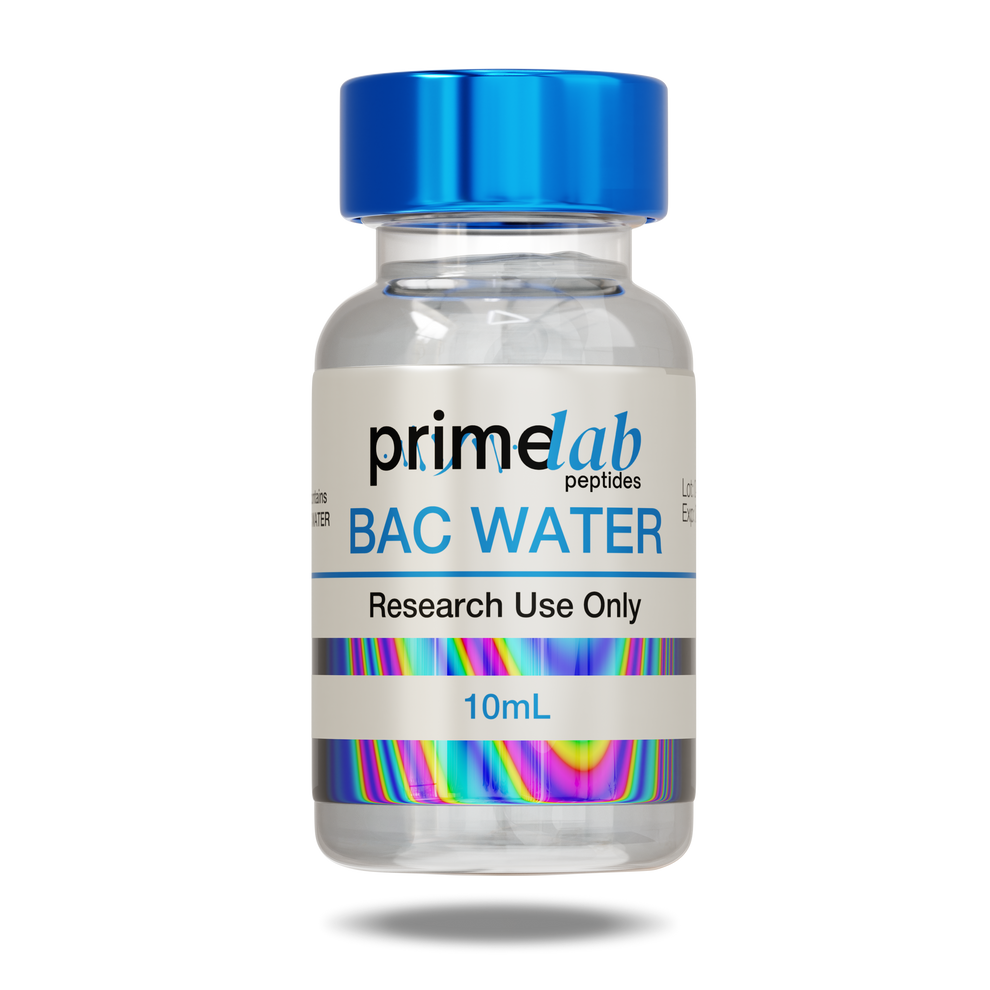
- Bacteriostatic Water (10 mL bottles): Use ~3.0 mL per vial for reconstitution.
- 3 vials: 9 mL → 1 × 10 mL bottle
- 5 vials: 15 mL → 2 × 10 mL bottles
- 6 vials: 18 mL → 2 × 10 mL bottles
- Alcohol Swabs: One for the vial stopper + one for the injection site each day.
- Per week: 14 swabs (2/day)
- 8 weeks: 112 swabs → recommend 2 × 100-count boxes
- 12 weeks: 168 swabs → recommend 2 × 100-count boxes
" /></div>)


Protocol Overview
Concise summary of the once-daily regimen.
- Goal: Support healthy sleep architecture and stress modulation over time[3][4].
- Schedule: Daily subcutaneous injections for 4–8 weeks (extend to 12 weeks if desired).
- Dose Range: 100–300 mcg daily with gradual titration; advanced up to 500 mcg.
- Reconstitution: 3.0 mL per 5 mg vial (~1.67 mg/mL) for accurate unit measurements.
- Storage: Lyophilized frozen; reconstituted refrigerated; avoid repeated freeze–thaw.
Dosing Protocol
Suggested daily titration approach.
- Start: 100 mcg daily; increase by ~50 mcg every 1–2 weeks as tolerated.
- Target: 250–300 mcg daily by Weeks 4–8.
- Frequency: Once per day (subcutaneous), typically before bedtime.
- Cycle Length: 4–8 weeks; optional extension to 12 weeks with periodic breaks.
- Timing: Evening administration preferred; rotate injection sites.
Storage Instructions
Proper storage preserves peptide quality.
Important Notes
Practical considerations for consistency and safety.
- Use new sterile insulin syringes; dispose in a sharps container.
- Rotate injection sites (abdomen, thighs, upper arms) to reduce local irritation.
- Inject slowly; wait a few seconds before withdrawing the needle.
- Document daily dose and site rotation to maintain consistency.
- Some research suggests DSIP effects may persist for multiple nights after dosing[2]; adjust frequency as needed.
How This Works
DSIP (Trp-Ala-Gly-Gly-Asp-Ala-Ser-Gly-Glu) was first characterized in 1977 as a sleep-modulating factor isolated from rabbit brain[1]. Mechanistic studies suggest DSIP may influence sleep by modulating GABAergic transmission and interacting with opioid receptor systems[10]. Research indicates it can increase delta-wave (slow-wave) sleep duration without significantly altering REM sleep architecture[3]. Beyond sleep, DSIP has demonstrated stress-protective and adaptogenic properties in various models, potentially through modulation of the hypothalamic-pituitary-adrenal axis[4][11].
Potential Benefits & Side Effects
Observations from preclinical and clinical literature.
- May promote deeper, more restorative slow-wave sleep and improve subjective sleep quality[3][5].
- Research suggests potential stress-protective and anxiolytic-like effects[4][11].
- Some studies indicate DSIP does not induce pharmacological tolerance with continued use[2].
- Generally well tolerated in human studies; occasional mild injection-site reactions may occur with subcutaneous administration.
- Limited long-term safety data; periodic breaks are recommended as a precaution[6].
Lifestyle Factors
Complementary strategies for best outcomes.
- Maintain consistent sleep-wake schedules to reinforce circadian rhythms.
- Limit blue light exposure and stimulants (caffeine, nicotine) in the hours before bed.
- Create a cool, dark, quiet sleep environment.
- Incorporate regular physical activity, ideally earlier in the day.
- Manage stress through relaxation techniques (meditation, deep breathing).
Injection Technique
General subcutaneous guidance from clinical best-practice resources[12].
- Clean the vial stopper and skin with alcohol; allow to dry.
- Pinch a skinfold; insert the needle at 45–90° into subcutaneous tissue[12][13].
- Do not aspirate for subcutaneous injections; inject slowly and steadily[12].
- Rotate sites systematically (abdomen at least 2 inches from navel, thighs, upper arms) to avoid lipohypertrophy[13].
Recommended Source
We recommend Prime Lab Peptides for high-purity DSIP (5 mg).
Why Prime Lab Peptides?
- High-purity, third-party-tested lots with batch COAs.
- Consistent, ISO-aligned handling and documentation.
- Reliable fulfillment to maintain cold-chain integrity.
Important Note
This content is for educational purposes only and is not medical advice.
References
Schoenenberger GA, Monnier M (1977)
— Characterization of a delta-electroencephalogram (-sleep)-inducing peptide. Proc Natl Acad Sci USA
European Journal of Anaesthesiology (2001)
— Delta sleep-inducing peptide: editorial review of mechanisms and clinical context