

Quickstart Highlights
Cortagen is an ultrashort tetrapeptide Ala–Glu–Asp–Pro (AEDP), synthesized as a defined fragment based on the bovine brain-cortex extract Cortexin. In research models it modulates gene expression and neuronal plasticity at microgram-per-kg ranges.
- Recognized research ranges: 0.01 mg/kg daily for ~10 days (i.m.) and 0.01–0.10 mg/kg daily for ~5 days (i.p.) in rodent models.
- Reconstitute to 3.0 mL (max vial capacity) to keep syringe measurements practical; 20 mg ÷ 3 mL = 6.67 mg/mL.
- At 6.67 mg/mL, 1 insulin “unit” (100-unit syringe) = 0.01 mL ≈ 0.0667 mg (66.7 µg).
- Example (70 kg, model scaling): 0.01 mg/kg → 0.70 mg/day ≈ 10.5 units; 0.03 mg/kg → 2.10 mg/day ≈ 31.5 units.
- Storage: Lyophilized at −20 °C (−4 °F); after reconstitution 2–8 °C (36–46 °F), protected from light.
- For research use only. Not for human consumption or veterinary use.

 Important: Before viewing any protocol, please consult our Prep & Injection Guide for essential preparation and safety instructions.
Dosing & Reconstitution Guide
Educational guide for reconstitution and daily dosing
Standard / Gradual Approach — 10-Day Course (3.0 mL = 6.67 mg/mL)
| Week | Daily Dosage | Units (per injection) with mL |
|---|---|---|
| Week 1 (Days 1–7) | Example @ 70 kg: 0.70 mg (10 µg/kg) | ≈ 10.5 units (0.105 mL) |
| Week 2 (Days 8–10) | Example @ 70 kg: 0.70 mg (10 µg/kg) | ≈ 10.5 units (0.105 mL) |
How to calculate for your model: Dose (mg) = 0.01 × Body Weight (kg). Units on a 100-unit syringe = Dose (mg) ÷ 0.0667. If units fall below ~10 even at 3.0 mL dilution, consider 50-unit or 30-unit syringes for precision.
Reconstitution steps:
- Draw 3.0 mL bacteriostatic water.
- Inject slowly along the vial wall; do not vigorously shake (gently swirl).
- Final concentration: 6.67 mg/mL (≈66.7 µg per insulin unit).
- Store reconstituted solution at 2–8 °C (36–46 °F), protected from light.
Advanced / Aggressive Approach — 5-Day Course (3.0 mL = 6.67 mg/mL)
Evidence base: In mice, intraperitoneal 0.01–0.10 mg/kg once daily for 5 days produced dose-dependent behavioral effects; 0.03 mg/kg is a commonly reported mid-range.‡
| Week | Daily Dosage | Units (per injection) with mL |
|---|---|---|
| Week 1 (Days 1–5) | Example @ 70 kg: 2.10 mg (0.03 mg/kg) | ≈ 31.5 units (0.315 mL) |
Calculation reminder: Units (100-unit syringe) = Dose (mg) ÷ 0.0667. At 0.03 mg/kg, most subjects will be well above the ~10-unit threshold with 3.0 mL dilution.
Reconstitution steps:
- Reconstitute the 20 mg vial with 3.0 mL bacteriostatic water.
- Gently swirl to dissolve completely; avoid foam.
- Refrigerate (2–8 °C) after mixing; protect from light.
Supplies Needed
For a single course (choose one approach):
- Peptide Vials (Cortagen 20mg):
• 10-day 0.01 mg/kg course: ≈ 1 vial (e.g., 70 kg → ~7 mg total)
• 5-day 0.03 mg/kg course: ≈ 1 vial (e.g., 70 kg → ~10.5 mg total)
Repeat courses or higher weights may require additional vials. - Insulin Syringes (100-unit): 10-day course ≈ 10; 5-day course ≈ 5
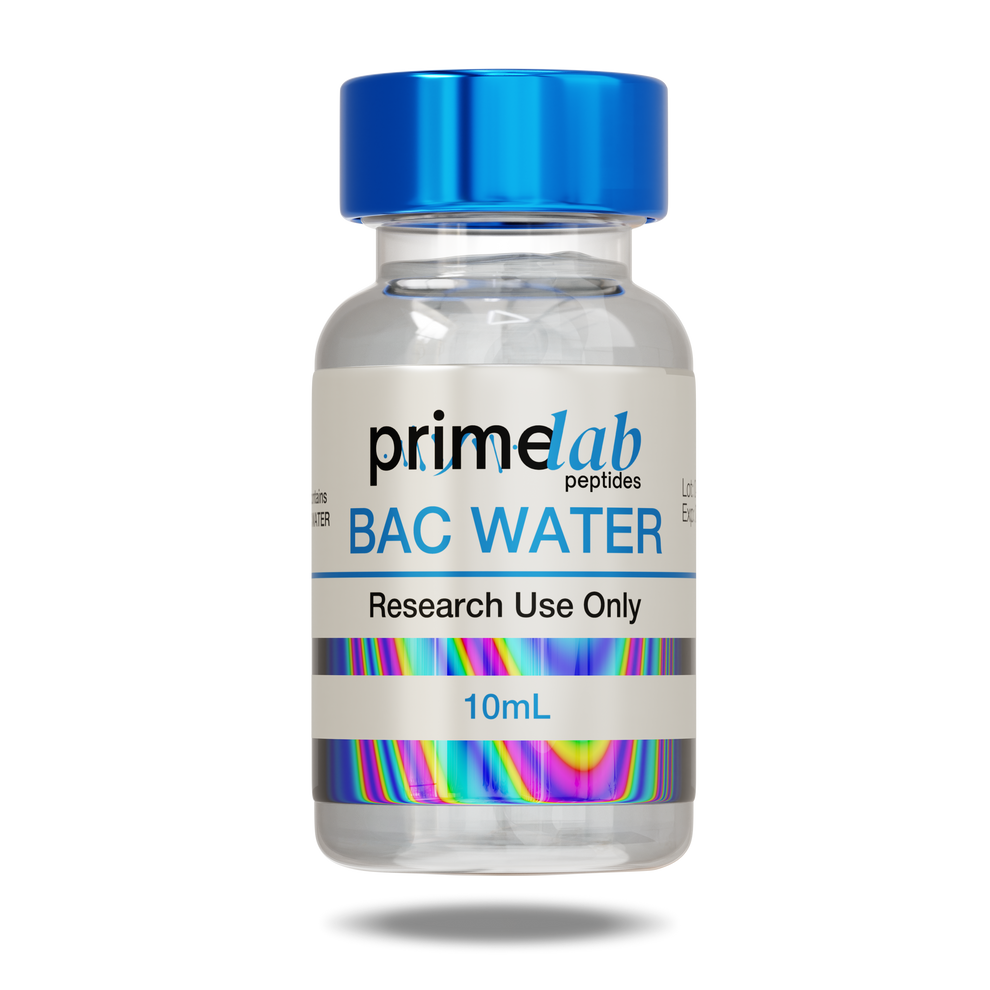
- Bacteriostatic Water: 1 × 10 mL
- Alcohol Swabs: 1 box
" /></div>)


Protocol Overview
Concise summary of two short-course, weight-scaled research regimens.
- Molecule: Cortagen (AEDP), a defined tetrapeptide modeled from Cortexin fractions.
- Schedules: (A) 0.01 mg/kg daily × 10 days (i.m. in rats); (B) 0.01–0.10 mg/kg daily × 5 days (i.p. in mice).
- Dose Examples (70 kg scaling): 0.70 mg/day (≈10.5 u) or 2.10 mg/day (≈31.5 u) with 3.0 mL dilution.
- Reconstitution: Use 3.0 mL to maintain ≥~10 units where feasible (6.67 mg/mL).
- Storage: Lyophilized −20 °C (−4 °F); reconstituted 2–8 °C (36–46 °F); protect from light.
Dosing Protocol
Weight-scaled calculations for your lab model.
- Daily Dose Formula: 0.01–0.03 mg/kg (per cited models); compute mg and convert to units using 6.67 mg/mL.
- Frequency: Once daily during the selected course (5 or 10 days).
- Timing: Dose at a consistent daily time. Document weight, route, and exact volume.
- Route: Per study design; published models used i.m. (10-day) and i.p. (5-day).
Storage Instructions
Proper storage helps maintain peptide integrity.
- Lyophilized: −20 °C (−4 °F), desiccated; avoid repeated freeze–thaw.
- Reconstituted: 2–8 °C (36–46 °F), protected from light; prepare aliquots for longer storage.
- Handling: Use sterile technique; gently swirl to dissolve.§
Important Notes
- 3.0 mL maximum reconstitution per vial (3 mL vial). Do not exceed.
- If calculated per-injection volume yields < ~10 units even at 3.0 mL, consider 50-unit or 30-unit syringes for finer graduation.
- Document species, weight, route (i.m./i.p./s.c.), and exact daily mg & mL to ensure reproducibility.
- Compliance: For research use only; not for human or veterinary use. No medical advice is provided.
How This Works
Studies indicate AEDP can influence gene expression programs and neuronal plasticity in vitro and in vivo.
- Gene Regulation: Short peptides modulate transcriptional activity in multiple tissues, including heart and brain cortex.
- Neuroplasticity: Ultrashort peptides support dendritogenesis and may counter synaptotoxic cascades in models of neurodegeneration.
- Model-Specific Effects: Behavioral and regenerative outcomes vary with dose, route, and duration.
Potential Benefits & Side Effects
Reported in preclinical literature (not clinical claims).
- Behavioral modulation in mice within the 0.01–0.10 mg/kg range (5-day courses).
- Enhanced nerve regeneration metrics in rat sciatic-injury models at 0.01 mg/kg (10-day course).
- Adverse effects data are limited; use standard lab safety, monitor animals per protocol.
Lifestyle Factors
- Calibrate syringes and verify volumes gravimetrically when feasible.
- Record lot numbers, reconstitution date, storage conditions, and daily dosing logs.
- Use controls and randomization to reduce bias in behavioral assays.
Injection Technique
- Disinfect vial septum & injection site; use sterile, single-use syringes/needles.
- Confirm correct route (i.m./i.p./s.c.) and anatomical site per protocol.
- Inject slowly; rotate sites as appropriate for the model.
Recommended Source
We recommend Prime Lab Peptides for high-purity Cortagen (20mg). For research use only.
Why Prime Lab Peptides?
- Emphasis on purity and batch-level documentation
- Research-focused logistics and support
- ISO-aligned handling practices
Important Note
This page is an educational resource summarizing preclinical literature. It is not medical advice. Products are for research use only—not for human or veterinary use.
References
PubMed:
Turchaninova LN et al. 0.01 mg/kg i.m. × 10 days in rat sciatic-injury model
(2000).
Bentham Open:
PMC: Kurkin DV et al.
(2021).