

Quickstart Highlights
CJC-1295 NO DAC (also known as Modified GRF 1–29 or Mod GRF) is a synthetic 29‑amino‑acid peptide analog of growth hormone–releasing hormone (GHRH) with a plasma half‑life of approximately 30 minutes[1]. Unlike the DAC (Drug Affinity Complex) version, this short‑acting analog produces more physiologic GH pulses and requires once‑daily subcutaneous administration[2][3]. This educational protocol presents a practical dilution for clear insulin‑syringe measurements.
- Reconstitute: Add 3.0 mL bacteriostatic water → ~1.67 mg/mL concentration.
- Typical daily range: 100–300 mcg once daily (gradual titration).
- Easy measuring: At 1.67 mg/mL, 1 unit = 0.01 mL ≈ 16.7 mcg on a U‑100 insulin syringe.
- Storage: Lyophilized: refrigerate at 2–8 °C (35.6–46.4 °F); after reconstitution, refrigerate and use within 1–2 weeks; for longer storage, freeze at ≤−20 °C (≤−4 °F).

 Important: Before viewing any protocol, please consult our Prep & Injection Guide for essential preparation and safety instructions.
Dosing & Reconstitution Guide
Educational guide for reconstitution and daily dosing
Standard / Gradual Approach (3 mL = ~1.67 mg/mL)
| Week | Daily Dose (mcg) | Units (per injection) (mL) |
|---|---|---|
| Weeks 1–2 | 100 mcg (0.1 mg) | 6 units (0.06 mL) |
| Weeks 3–4 | 150 mcg (0.15 mg) | 9 units (0.09 mL) |
| Weeks 5–6 | 200 mcg (0.2 mg) | 12 units (0.12 mL) |
| Weeks 7–8 | 250 mcg (0.25 mg) | 15 units (0.15 mL) |
| Weeks 9–10 | 300 mcg (0.3 mg) | 18 units (0.18 mL) |
Frequency: Inject once daily subcutaneously, typically at bedtime to align with natural nocturnal GH pulsatility[2][3]. This gradual titration (increasing by ~50 mcg every 2 weeks) helps mitigate potential side effects such as injection‑site irritation or flushing[4].
For ≤10‑unit (≤0.10 mL) administrations (Weeks 1–4), consider 30‑ or 50‑unit insulin syringes for improved readability.
Reconstitution steps:
- Draw 3.0 mL bacteriostatic water with a sterile syringe.
- Inject slowly down the vial wall; avoid foaming.
- Gently swirl/roll until dissolved (do not shake).
- Label and refrigerate at 2–8 °C (35.6–46.4 °F), protected from light.
Supplies Needed
Plan based on an 8–16 week daily protocol with gradual titration.
- Peptide Vials (CJC-1295 NO DAC, 5 mg each):
- 8 weeks ≈ 2 vials
- 12 weeks ≈ 4 vials
- 16 weeks ≈ 6 vials
- Insulin Syringes (U‑100):
- Per week: 7 syringes (1/day)
- 8 weeks: 56 syringes
- 12 weeks: 84 syringes
- 16 weeks: 112 syringes
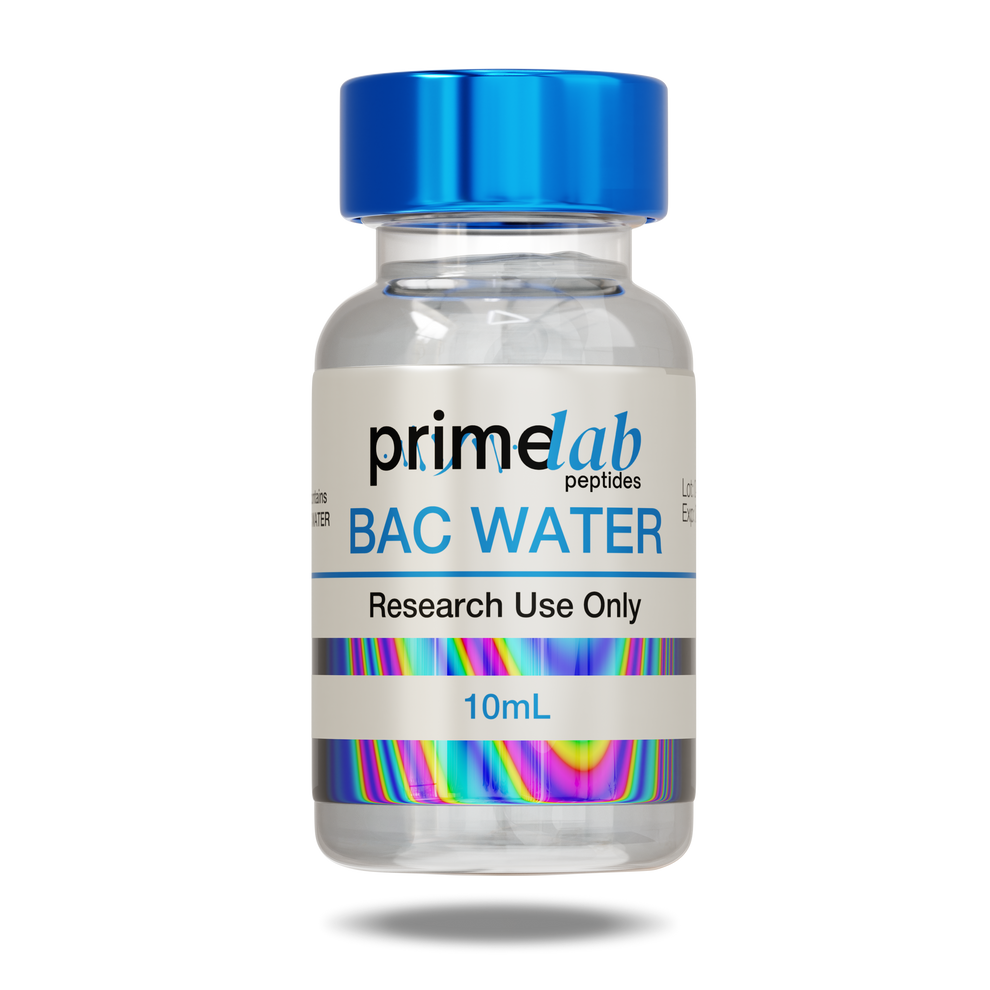
- Bacteriostatic Water (10 mL bottles): Use ~3.0 mL per vial for reconstitution.
- 8 weeks (2 vials): 6 mL → 1 × 10 mL bottle
- 12 weeks (4 vials): 12 mL → 2 × 10 mL bottles
- 16 weeks (6 vials): 18 mL → 2 × 10 mL bottles
- Alcohol Swabs: One for the vial stopper + one for the injection site each day.
- Per week: 14 swabs (2/day)
- 8 weeks: 112 swabs → recommend 2 × 100‑count boxes
- 12 weeks: 168 swabs → recommend 2 × 100‑count boxes
- 16 weeks: 224 swabs → recommend 3 × 100‑count boxes
" /></div>)


Protocol Overview
Concise summary of the once‑daily regimen.
- Goal: Stimulate pulsatile GH release and elevate IGF‑1 levels over time[2][5].
- Schedule: Daily subcutaneous injections for 8–12 weeks (extend to 16 weeks if desired).
- Dose Range: 100–300 mcg daily with gradual titration.
- Reconstitution: 3.0 mL per 5 mg vial (~1.67 mg/mL) for accurate unit measurements.
- Storage: Lyophilized refrigerated; reconstituted refrigerated 1–2 weeks; freeze for longer storage.
Dosing Protocol
Suggested daily titration approach.
- Start: 100 mcg daily; increase by ~50 mcg every 2 weeks as tolerated[4].
- Target: 200–300 mcg daily by Weeks 5–10.
- Frequency: Once per day (subcutaneous), typically at bedtime.
- Cycle Length: 8–12 weeks; optional extension to 16 weeks.
- Timing: Evening/bedtime administration aligns with nocturnal GH physiology[2].
Storage Instructions
Proper storage preserves peptide quality[6].
- Lyophilized: Store at 2–8 °C (35.6–46.4 °F) in dry, dark conditions; stable for days to weeks at room temperature but refrigeration extends shelf life.
- Reconstituted: Refrigerate at 2–8 °C (35.6–46.4 °F); use within 1–2 weeks for maximal potency.
- Long‑term: Aliquot and freeze at ≤−20 °C (≤−4 °F); avoid repeated freeze–thaw cycles.
- Gently swirl (do not shake) when reconstituting; check for particulates before use.
Important Notes
Practical considerations for consistency and safety.
- Use new sterile insulin syringes for each injection; dispose in a sharps container[7].
- Rotate injection sites (abdomen, thighs, upper arms) at least 1 inch apart to reduce local irritation[7][8].
- Inject slowly; wait a few seconds before withdrawing the needle.
- Document daily dose and site rotation to maintain consistency.
- For low‑volume doses (≤10 units), use 30‑ or 50‑unit syringes for improved accuracy.
How This Works
CJC-1295 NO DAC (Modified GRF 1–29) is a truncated GHRH analog with four amino acid substitutions that enhance stability against enzymatic degradation[1]. It binds to GHRH receptors on pituitary somatotrophs, stimulating the synthesis and pulsatile release of endogenous growth hormone[3][4]. Unlike exogenous GH administration, GHRH analogs preserve the physiologic feedback loop, resulting in more natural GH pulsatility. Clinical studies with related GHRH analogs (sermorelin) demonstrate sustained increases in growth velocity and IGF‑1 levels with chronic once‑daily therapy[2][3].
Potential Benefits & Side Effects
Observations from preclinical and clinical literature on GHRH analogs.
- Stimulates pulsatile GH release and elevates IGF‑1 levels with chronic administration[2][5][9].
- May support improvements in body composition, recovery, and sleep quality over extended protocols.
- Preserves physiologic GH feedback mechanisms unlike exogenous GH[3].
- Generally well tolerated; potential side effects include transient flushing, headache, dizziness, or injection‑site reactions[4].
- Gradual dose titration helps minimize adverse effects.
Lifestyle Factors
Complementary strategies for best outcomes.
- Pair with a balanced, protein‑forward diet tailored to energy and recovery needs.
- Combine resistance training and aerobic activity to reinforce metabolic adaptations.
- Prioritize quality sleep—bedtime dosing may synergize with natural nocturnal GH peaks.
- Manage stress to support hormonal balance and adherence.
Injection Technique
- Clean the vial stopper and skin with alcohol; allow to dry.
- Using a fine insulin syringe (29–31 G, 0.5 inch needle), pinch about an inch of skin.
- Insert the needle at 90° (or 45° if the fat layer is thin) into subcutaneous tissue[7].
- Do not aspirate for subcutaneous injections; inject slowly and steadily.
- Rotate sites systematically (abdomen, thighs, upper arms) at least 1 inch apart to avoid irritation or tissue changes[8].
- Dispose of used syringes in a proper sharps container—never reuse needles.
Recommended Source
We recommend Pure Lab Peptides for high‑purity CJC-1295 NO DAC (5 mg).
Why Pure Lab Peptides?
- High‑purity, third‑party‑tested lots with batch COAs.
- Consistent, ISO‑aligned handling and documentation.
- Reliable fulfillment to maintain cold‑chain integrity.
Important Note
This content is intended for therapeutic educational purposes only and does not constitute medical advice, diagnosis, or treatment.
References
Wikipedia
— Modified GRF (1–29): structure, amino acid substitutions, and pharmacokinetics
PubMed – Thorner M, et al. (1996)
— Once‑daily GHRH therapy accelerates growth in GH‑deficient children; J Clin Endocrinol Metab