

Quickstart Highlights
- Reconstitute: Add 3.0 mL bacteriostatic water → 6.67 mg/mL concentration.
- Typical daily range: 250–4,000 mcg once daily (gradual titration over 8–16 weeks).
- Easy measuring: At 6.67 mg/mL, 1 unit = 0.01 mL ≈ 66.67 mcg on a U‑100 insulin syringe.
- Storage: Lyophilized: refrigerate at 4 °C (39.2 °F) short‑term or freeze at −20 °C (−4 °F) long‑term; after reconstitution, refrigerate at 2–8 °C (35.6–46.4 °F); avoid freeze–thaw cycles.

 Important: Before viewing any protocol, please consult our Prep & Injection Guide for essential preparation and safety instructions.
Dosing & Reconstitution Guide
Educational guide for reconstitution and daily dosing
Standard / Gradual Approach (3 mL = 6.67 mg/mL)
| Week | Daily Dose (mcg) | Units (per injection) (mL) |
|---|---|---|
| Weeks 1–2 | 250 mcg (0.25 mg) | 3.75 units (0.0375 mL) |
| Weeks 3–4 | 500 mcg (0.5 mg) | 7.5 units (0.075 mL) |
| Weeks 5–6 | 1,000 mcg (1 mg) | 15 units (0.15 mL) |
| Weeks 7–8 | 1,500 mcg (1.5 mg) | 22.5 units (0.225 mL) |
| Weeks 9–10 | 2,000 mcg (2 mg) | 30 units (0.30 mL) |
| Weeks 11–12 | 3,000 mcg (3 mg) | 45 units (0.45 mL) |
| Weeks 13–14 | 4,000 mcg (4 mg) | 60 units (0.60 mL) |
| Weeks 15–16 | 4,000 mcg (4 mg) | 60 units (0.60 mL) |
Frequency: Inject once daily subcutaneously. For ≤10‑unit (≤0.10 mL) administrations during Weeks 1–4, consider 30‑ or 50‑unit insulin syringes for improved readability.
Reconstitution steps:
- Draw 3.0 mL bacteriostatic water with a sterile syringe.
- Inject slowly down the vial wall; avoid foaming.
- Gently swirl/roll until dissolved (do not shake).
- Label and refrigerate at 2–8 °C (35.6–46.4 °F), protected from light.
Supplies Needed
Plan based on an 8–16 week daily protocol with gradual titration.
- Peptide Vials (Chonluten, 20 mg each):
- 8 weeks ≈ 3 vials (45.5 mg total)
- 12 weeks ≈ 6 vials (115.5 mg total)
- 16 weeks ≈ 12 vials (227.5 mg total)
- Insulin Syringes (U‑100):
- Per week: 7 syringes (1/day)
- 8 weeks: 56 syringes
- 12 weeks: 84 syringes
- 16 weeks: 112 syringes
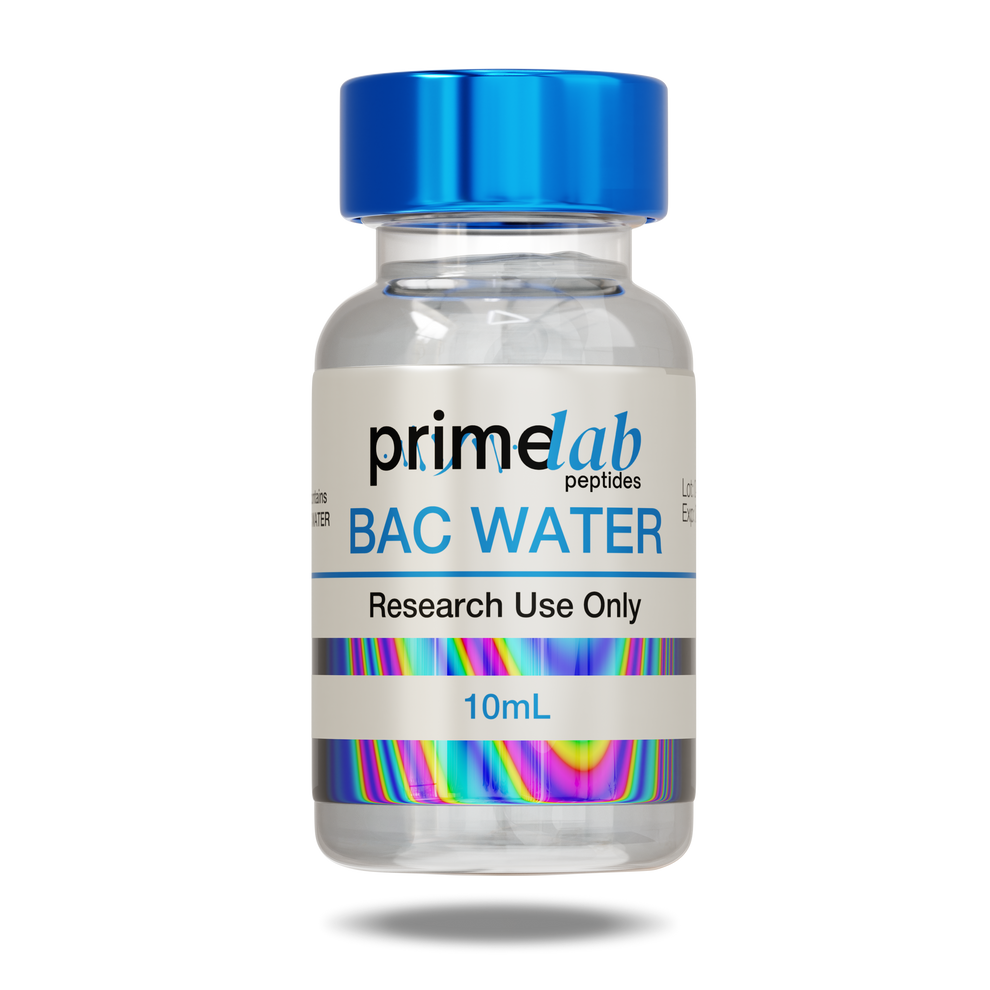
- Bacteriostatic Water (10 mL bottles): Use 3.0 mL per vial for reconstitution.
- 8 weeks (3 vials): 9 mL → 1 × 10 mL bottle
- 12 weeks (6 vials): 18 mL → 2 × 10 mL bottles
- 16 weeks (12 vials): 36 mL → 4 × 10 mL bottles
- Alcohol Swabs: One for the vial stopper + one for the injection site each day.
- Per week: 14 swabs (2/day)
- 8 weeks: 112 swabs → recommend 2 × 100‑count boxes
- 12 weeks: 168 swabs → recommend 2 × 100‑count boxes
- 16 weeks: 224 swabs → recommend 3 × 100‑count boxes
- Peptide Vials (Chonluten, 20 mg each):
" /></div>)


Protocol Overview
Concise summary of the once‑daily regimen.
- Goal: Support bronchopulmonary tissue function and modulate inflammatory pathways[1].
- Schedule: Daily subcutaneous injections for 8–16 weeks with gradual titration.
- Dose Range: 250–4,000 mcg daily with incremental increases every 1–2 weeks.
- Reconstitution: 3.0 mL per 20 mg vial (6.67 mg/mL) for accurate unit measurements.
- Storage: Lyophilized refrigerated or frozen; reconstituted refrigerated; avoid repeated freeze–thaw.
Dosing Protocol
Suggested daily titration approach.
- Start: 250 mcg daily; increase by 250–500 mcg every 1–2 weeks as tolerated.
- Target: Up to 4,000 mcg daily by Weeks 13–16.
- Frequency: Once per day (subcutaneous).
- Cycle Length: 8–16 weeks; shorter durations (8–12 weeks) acceptable.
- Timing: Any consistent time; rotate injection sites.
Storage Instructions
Proper storage preserves peptide quality[3].
- Lyophilized (short‑term): Refrigerate at 4 °C (39.2 °F) in dry, dark conditions.
- Lyophilized (long‑term): Store at −20 °C (−4 °F) or colder; minimize moisture exposure.
- Reconstituted: Refrigerate at 2–8 °C (35.6–46.4 °F); use within days to weeks and avoid freeze–thaw.
- Allow vials to reach room temperature before opening to reduce condensation uptake.
Important Notes
Practical considerations for consistency and safety.
- Use new sterile insulin syringes; dispose in a sharps container[6].
- Rotate injection sites (abdomen, thighs, upper arms) to reduce local irritation.
- Inject slowly; wait a few seconds before withdrawing the needle.
- Document daily dose and site rotation to maintain consistency.
- For initial low‑volume doses (≤10 units), use 30‑ or 50‑unit insulin syringes for improved accuracy.
How This Works
Chonluten (Glu‑Asp‑Gly) is a short bioregulatory peptide studied within the Khavinson peptide bioregulator framework targeting bronchopulmonary tissues[1]. In vitro research using monocyte/macrophage (THP‑1) cell models indicates Chonluten may modulate proliferative activity and inflammatory pathways at concentrations in the nanomolar range[1]. Short peptides such as Chonluten typically exhibit poor oral bioavailability due to enzymatic degradation and limited mucosal permeability, supporting subcutaneous administration as the preferred route[2][5].
Potential Benefits & Side Effects
Observations from preclinical literature.
- May support bronchopulmonary tissue function and respiratory cell regulation based on bioregulator peptide research[1].
- Cell‑culture studies suggest modulation of inflammatory and proliferative pathways in monocyte/macrophage models[1].
- Short peptides in this class generally show favorable tolerability profiles in preclinical settings[5].
- Occasional mild injection‑site reactions (redness/itch) may occur with subcutaneous administration.
Lifestyle Factors
Complementary strategies for respiratory and general wellness.
- Maintain a balanced diet rich in antioxidants to support respiratory tissue health.
- Engage in regular aerobic activity appropriate to fitness level.
- Prioritize sleep and stress management to support immune function and recovery.
- Avoid smoking and minimize exposure to respiratory irritants.
Injection Technique
- Clean the vial stopper and skin with alcohol; allow to dry.
- Pinch a skinfold; insert the needle at 45° into subcutaneous tissue using a 25–27 gauge, ⅝‑inch needle[4].
- Do not aspirate for subcutaneous injections; inject slowly and steadily[4].
- Rotate sites systematically (abdomen, thighs, upper arms) to avoid lipohypertrophy[8].
Recommended Source
We recommend Prime Lab Peptides for high‑purity Chonluten (20 mg).
Why Prime Lab Peptides?
- High‑purity, third‑party‑tested lots with batch COAs.
- Consistent, ISO‑aligned handling and documentation.
- Reliable fulfillment to maintain cold‑chain integrity.
Important Note
This content is intended for therapeutic educational purposes only and does not constitute medical advice, diagnosis, or treatment.
References
Int J Mol Sci (2022)
— Peptides Regulating Proliferative Activity and Inflammatory Pathways in the Monocyte/Macrophage THP-1 Cell Line
Biomedicines (2025)
Sigma-Aldrich
Signal Transduction and Targeted Therapy (2022)
NCBI Bookshelf
Subcutaneous Drug Injection Review (PMC)
Alzheimer’s Drug Discovery Foundation (2015)
Pure Lab Peptides
References
-
Int J Mol Sci (2022)
— Peptides Regulating Proliferative Activity and Inflammatory Pathways in the Monocyte/Macrophage THP-1 Cell Line -
Biomedicines (2025)
— Overcoming Oral Cavity Barriers for Peptide Delivery Using Advanced Pharmaceutical Techniques and Nano-Formulation Platforms -
Sigma-Aldrich
— Peptide Handling Guide (storage, reconstitution, and stability recommendations) -
CDC (Subcut Injection PDF)
— You Call the Shots: Subcutaneous Injection Technique -
Signal Transduction and Targeted Therapy (2022)
— Therapeutic peptides: current applications and future directions -
CDC
— Preventing Unsafe Injection Practices (clinical safety guidance) -
WHO (2021)
— Guidance on preparation and administration of subcutaneous injections -
NCBI Bookshelf
— Best practices for injection (asepsis, preparation, and administration) -
Subcutaneous Drug Injection Review (PMC)
— Pharmacologic considerations of the subcutaneous route -
Alzheimer’s Drug Discovery Foundation (2015)
— Epithalamin/Epithalon Evidence Summary (bioregulator peptide context) -
Prime Lab Peptides
— Chonluten (20 mg) product page (quality and batch documentation)