
Teriparatide (10 mg) Dosage Protocol
Recombinant parathyroid hormone fragment PTH(1–34) — the approved bone-building drug Forteo. Clinically dosed in micrograms per day, not milligrams. Research-use-only reference; not medical advice and not a dosing recommendation.

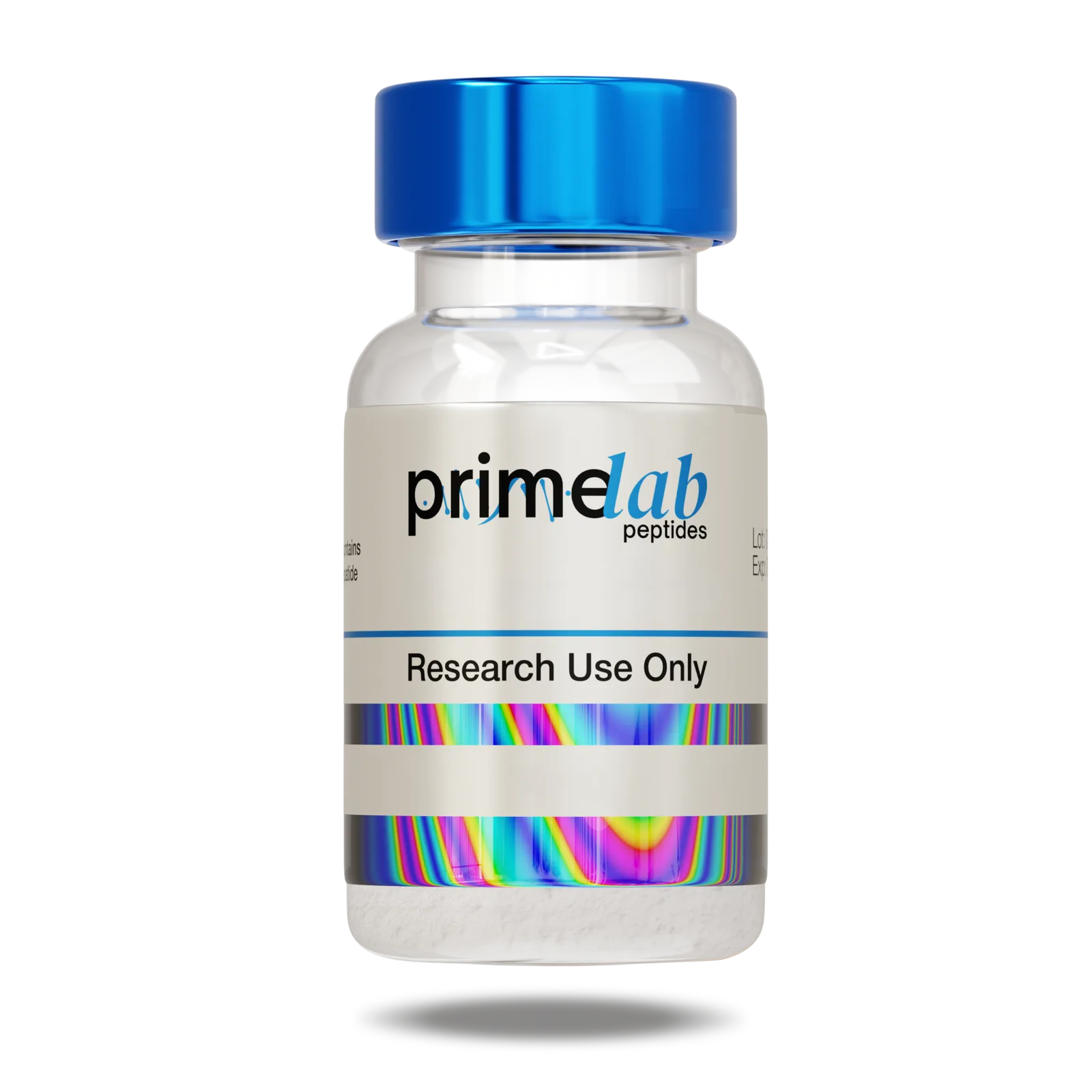
A parathyroid-hormone fragment that, given as a once-daily pulse, preferentially stimulates bone-building osteoblasts over bone-resorbing osteoclasts, so intermittent exposure builds bone. The exact opposite pattern — continuously elevated PTH — drives bone breakdown, which is why the timing of exposure, not just the molecule, defines the effect.
An FDA-approved anabolic osteoporosis medicine (Forteo) dosed at 20 mcg subcutaneously once daily from a pre-filled pen. It is a genuine drug with strong trial evidence, but that evidence applies to the approved microgram dose and device, not to a milligram-scale research vial reconstituted at home.
The pivotal randomized trial in postmenopausal women with prior vertebral fractures showed large reductions in new vertebral and non-vertebral fractures and gains in spine and hip bone density. Rat studies produced dose- and duration-dependent bone tumors; long-term human surveillance has not found an increased osteosarcoma rate.
Pre-filled with this protocol’s recommended BAC water and documented starting dose — edit any field to run your own numbers. Reconstitution math only — not dosing advice. U-100 syringe: 100 units = 1 mL. Full reconstitution guide → · Advanced calculator →Mix & measure Teriparatide · 10 mg
Dosing & Reconstitution Guide
Teriparatide has a well-defined clinical dose — 20 mcg subcutaneously once daily from an approved pre-filled pen[1] — but this page does not provide a self-administration protocol. What follows is the arithmetic of turning a lyophilized research vial into a known concentration, presented as laboratory-handling reference only, with the microgram scale of the real drug made explicit at every step.
Standard / Gradual Approach
The number to fix in mind is micrograms. The pivotal fracture trial used 20 mcg or 40 mcg per day; the 20 mcg dose was chosen for approval because it delivered the fracture benefit with fewer side effects than 40 mcg[1]. Both are vanishingly small amounts. A 10 mg research vial contains 10,000 mcg — about 500 of the 20 mcg clinical daily doses in a single vial.
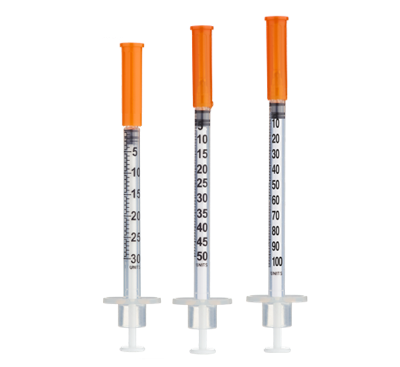
Because the drug is measured in micrograms, ordinary reconstitution makes accurate measurement essentially impossible. At 5 mg/mL (10 mg in 2 mL), a 20 mcg amount is 0.004 mL — roughly 0.4 of a single U-100 unit, below the smallest graduation on an insulin syringe. There is no way to draw that accurately by hand, which is precisely why the approved product is a fixed-dose pen and not a vial-and-syringe kit.
It is worth stating plainly: teriparatide is a prescription anabolic hormone with real contraindications and monitoring requirements. It is used clinically under medical supervision, typically for a defined course, with attention to serum and urinary calcium. None of that can be reproduced with a grey-market vial of uncertain identity and potency, and this reference exists to explain the science — not to endorse home use of a microgram-dosed hormone.
| Reference amount | Volume at 5 mg/mL | U-100 units |
|---|---|---|
| 20 mcg (clinical daily dose) | 0.004 mL | ~0.4 units |
| 40 mcg (higher trial dose) | 0.008 mL | ~0.8 units |
| 80 mcg | 0.016 mL | ~1.6 units |
| 10 mg (entire vial ≈ 500 daily doses) | 2.0 mL | 200 units |
Why Teriparatide draws research interest
These are the directions researchers and the peptide community most often explore Teriparatide for — so you know you’re in the right place. They describe what is being studied, not proven benefits, approved uses, or promised results.
Bone density & osteoporosis
The approved use: PTH(1–34) is FDA-approved as Forteo for osteoporosis at high fracture risk, dosed at 20 micrograms daily.
Fracture risk
Its pivotal trial reported fewer vertebral and non-vertebral fractures in postmenopausal women — an approved outcome, not a research claim.
Bone healing & repair
Explored beyond its label in fracture and bone-graft healing; that evidence is far thinner than the osteoporosis data and remains investigational.
Anabolic vs catabolic PTH
Studied for why one daily pulse builds bone while continuously high PTH breaks it down. Mechanism research, not a dosing instruction.
Evidence ranges from early laboratory work to clinical trials depending on the use — the sections below cover the actual data and sources.
Quickstart Highlights
Teriparatide is recombinant human parathyroid hormone (1–34) — the biologically active amino-terminal fragment of the 84-amino-acid hormone PTH, produced in E. coli. It is the active ingredient in Forteo (and its biosimilars), an FDA-approved anabolic (bone-building) treatment for osteoporosis. Unlike almost every other compound catalogued on this site, teriparatide is a fully approved medicine with large randomized-trial evidence[1].
This page is an educational reference explaining what teriparatide is, the single most important fact about how it is dosed, and what the research actually shows. It is not medical advice and not a protocol to self-administer the peptide. The one point that matters above all others: teriparatide is dosed clinically in micrograms (mcg) — the approved dose is 20 mcg once daily[1]. A “10 mg” research vial therefore contains roughly 500 times a single clinical daily dose. Confusing milligrams for micrograms with this hormone is a serious and dangerous error.
The PTH(1–34) fragment of parathyroid hormone — an FDA-approved anabolic osteoporosis drug (Forteo) that builds new bone when given once daily[1].
Clinically 20 mcg/day — micrograms, not milligrams. A 10 mg vial holds ~500 daily clinical doses. The approved product is a pre-filled pen, not a reconstituted vial.
FDA-approved (2002) for osteoporosis at high fracture risk. A grey-market “research vial” is not the approved pen and is not quality-assured.
Robust human RCT data for the approved drug — it cut vertebral and non-vertebral fractures in a pivotal 1,637-woman trial[1]. That evidence belongs to the pen at 20 mcg/day, not to milligram self-dosing.
Reconstitution Steps
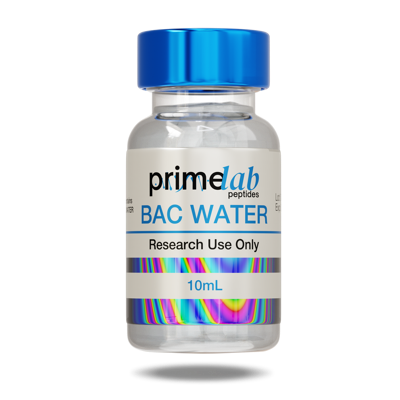
A research vial is lyophilized powder that must be reconstituted with bacteriostatic water before it can be measured. Using 2 mL for a 10 mg vial gives 5 mg/mL. This is a laboratory-handling step only; it is not preparation for administering the hormone, and it does not make a microgram dose measurable by ordinary means.
- ▪Sanitize: swab the vial stopper and the bacteriostatic-water stopper with fresh alcohol pads and let them air-dry.
- ▪Add 2 mL slowly: draw 2 mL of bacteriostatic water and let it run down the inside wall of the vial rather than onto the powder. This yields 5 mg/mL.
- ▪Dissolve gently: let it stand about 30 seconds, then swirl or roll the vial between your palms. Do not shake. Discard it if the solution stays cloudy or holds particles.
- ▪Refrigerate: store the reconstituted vial at 2–8 °C, protected from light, and never freeze a reconstituted peptide. Note that the approved pen is used and stored under its own specific refrigeration schedule.
Supplies Needed
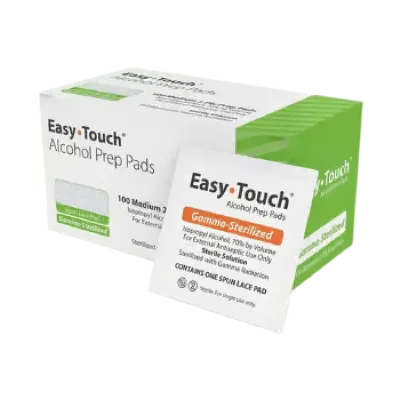
The generic reconstitution kit below is what a laboratory would use to bring a lyophilized vial into solution for measurement and storage. Listing it does not imply the hormone should be self-injected — the approved product is a pre-filled pen used under medical supervision, and a microgram dose cannot be accurately drawn from a milligram vial with these tools.
Protocol Overview
The practical picture for teriparatide is unusual for this site: it is a fully approved, well-studied medicine whose evidence is strong — but whose real-world use is defined by a fixed 20 mcg/day pen, not by a reconstitutable vial[1]. There is a genuine clinical dose, a genuine device, and genuine monitoring; none of it maps cleanly onto a milligram research vial.
What makes it scientifically notable is the anabolic pulse mechanism — intermittent PTH builds bone while continuous PTH breaks it down[5] — and the carefully resolved osteosarcoma question, where a real rodent signal[2] was followed by nearly two decades of human surveillance that did not show an increased rate[3][4]. That is a model of how a safety concern should be investigated. The honest limitation for anyone reading this outside a clinic is simple: this is a potent microgram-dosed prescription hormone, and an unverified vial is the wrong way to encounter it.
Dosing Protocol
The table is a concentration–volume reference only for a 10 mg vial reconstituted in 2 mL (→ 5 mg/mL). It exists to make the microgram scale concrete — note how small the volumes are. It is not a dose recommendation. The clinical dose is 20 mcg/day from an approved pen; the sub-unit volumes below are exactly why a milligram vial cannot deliver it accurately.
Storage Instructions
Lyophilized vials are stable refrigerated and should be protected from light; follow the supplier’s handling guidance for the unreconstituted powder. Do not freeze a vial once it has been reconstituted. The approved Forteo pen has its own specific in-use refrigeration and expiry schedule that a research vial does not replicate.
After reconstitution with bacteriostatic water, store at 2–8 °C, protect from light, and discard any solution that turns cloudy or particulate. Peptide hormones are sensitive to heat and agitation, and a degraded or improperly stored vial has no assurance of retaining potency — a particular problem for a hormone whose active dose is already at the microgram edge of measurability.
Important Notes
The points below are the ones that matter most for anyone encountering teriparatide, and the first is the one that prevents a dangerous dosing error.
- ▪Micrograms, not milligrams: the clinical dose is 20 mcg/day[1]. A 10 mg vial holds ~500 daily doses. This is the single most important fact on the page — a milligram-for-microgram mistake with this hormone is genuinely dangerous.
- ▪The approved product is a pen, not a vial: Forteo ships as a ready-to-use pre-filled pen delivering a fixed 20 mcg. A reconstituted grey-market vial is not the approved drug and cannot be dosed accurately at the microgram scale.
- ▪Osteosarcoma history — the accurate version: rat studies showed dose- and duration-dependent bone tumors[2]; the original label carried a boxed warning and a 2-year limit. Long-term human surveillance did not find an increased rate[3][4], and the FDA removed the boxed warning and 2-year limit in 2020. Bone metastases, prior skeletal radiation, Paget’s disease and unexplained high alkaline phosphatase remain contraindications.
- ▪Real, monitorable side effects: teriparatide can cause transient hypercalcemia, orthostatic (postural) hypotension—especially after the first doses—nausea, leg cramps and dizziness. Clinical use includes calcium monitoring; self-use has none.
- ▪It is a prescription hormone: teriparatide is used under medical supervision for osteoporosis at high fracture risk, not as a general “bone/recovery” peptide. There is no evidence base for casual or performance use.
- ▪Research vials are unverified: grey-market material has no guaranteed identity, potency or purity. For a microgram-dosed hormone, an unverified milligram vial compounds an already-serious measurement problem.
How This Works
Parathyroid hormone is the body’s primary regulator of calcium, acting through the PTH1 receptor on cells of the osteoblast lineage. Teriparatide is the 1–34 fragment — the part of the molecule that carries the receptor-activating activity. Signaling runs through cAMP/PKA and related pathways and engages the Wnt system, tilting the bone-remodeling balance toward bone formation when the exposure is brief[5].
The defining feature of teriparatide is that its effect depends on how the hormone is delivered. Given as a once-daily pulse, PTH(1–34) favors osteoblast activity and survival and produces net bone formation — the anabolic effect exploited clinically. When PTH is continuously elevated instead — as in primary hyperparathyroidism — the same receptor signaling shifts toward osteoclast-driven resorption and bone loss[5]. Intermittent versus continuous exposure is therefore the whole game.
This is why teriparatide is dosed as a small daily injection rather than a sustained infusion, and why the clinical evidence — large reductions in vertebral and non-vertebral fractures with gains in spine and hip bone density[1] — is tied specifically to the once-daily 20 mcg regimen. It also explains why the compound cannot be treated like a generic “more is better” peptide: the pharmacokinetic pattern, not the raw amount, is what makes it anabolic.
Lifestyle Factors
For the population teriparatide is actually approved for — people with osteoporosis at high fracture risk — the evidence-based foundations are adequate calcium and vitamin D, weight-bearing exercise, and avoiding smoking and excess alcohol. In clinical use the drug is layered on top of those basics and is usually followed by an antiresorptive agent to preserve the bone gained. That is a medically supervised sequence, not a self-directed one.
Beyond that, the honest framing is restraint: teriparatide is a potent, microgram-dosed prescription hormone with real contraindications and monitoring needs. Bone health and fracture risk belong with a physician who can order the right imaging and labs — not with an unverified research vial handled at home.
Potential Benefits & Side Effects
Evidence tier: robust human randomized-trial data for the approved drug. The “effects” below are documented findings for teriparatide used clinically at 20 mcg/day — they describe the approved medicine, not a benefit established for self-injecting a milligram research vial. Teriparatide is a prescription hormone used under medical supervision.
Reported Effects
- ▪Fracture reduction (strong human evidence): in the pivotal trial, new vertebral fractures fell from 14% (placebo) to 5% and non-vertebral fragility fractures roughly halved over a median 21 months[1].
- ▪Bone-density gains (human): the 20 mcg dose increased lumbar-spine bone mineral density by about 9 percentage points more than placebo, and femoral-neck density by about 3 points more[1].
- ▪Anabolic mechanism (documented): intermittent PTH(1–34) preferentially stimulates osteoblastic bone formation via PTH1R/cAMP–PKA and Wnt signaling[5].
- ▪Reassuring long-term safety signal (human): 15 years of US post-marketing surveillance found the osteosarcoma rate in treated patients no higher than background (standardized incidence ratio 0.72)[3], and a large registry found zero cases[4].
- ▪What is not established: any benefit, or any safety, for self-administering a milligram-scale research vial of unverified identity outside the approved microgram dose, device and monitoring.
Common Side Effects
- ▪Hypercalcemia: teriparatide can transiently raise serum and urinary calcium; clinical use includes calcium monitoring that self-use does not.
- ▪Orthostatic hypotension: transient drops in blood pressure on standing, particularly after the first several doses, can cause dizziness or faintness.
- ▪Common nuisances: nausea, headache, leg cramps and injection-site reactions are reported in clinical use[1].
- ▪Contraindications are real: it should not be used with pre-existing bone metastases or skeletal malignancy, prior skeletal radiation, Paget’s disease, or unexplained elevated alkaline phosphatase — conditions no home user can screen for.
- ▪Microgram-dose measurement risk: the clinical dose is below the accurate resolution of an insulin syringe when drawn from a milligram vial, so home dosing carries a high risk of large accidental over- or under-dose.
- ▪Research-chemical risk: mislabeling, wrong potency and contamination are the usual hazards of unregulated vials, with no medical oversight of use.
Injection Technique
The section below documents the generic subcutaneous reconstitution-and-handling workflow used across this site for completeness. It is not a recommendation to self-inject teriparatide. The approved product is a fixed-dose pre-filled pen used under medical supervision, and a 20 mcg dose cannot be measured accurately from a reconstituted milligram vial. Teriparatide should be handled only in appropriate clinical or laboratory settings.
Pre-Injection Preparation
- ▪Understand this is a prescription hormone: teriparatide is used clinically at 20 mcg/day under supervision, from a pen, not as a self-directed milligram vial — the steps here describe generic peptide handling, not treatment.
- ▪Confirm the concentration: the reference volumes assume 5 mg/mL (10 mg in 2 mL). A different diluent volume changes every figure — and none of them make a 20 mcg dose measurable.
- ▪Inspect: the reconstituted solution should be clear and particle-free; discard it if cloudy or discolored.
Injection Procedure
- ▪Clinical/laboratory handling only: a microgram-dosed hormone belongs in a supervised setting with proper devices, not a home self-administration context.
- ▪The measurement problem is the point: at 5 mg/mL a 20 mcg amount is ~0.4 of one U-100 unit — below what a syringe can accurately draw, which is exactly why the approved product is a fixed-dose pen.
- ▪Do not self-administer: with a microgram therapeutic window, real contraindications, and unverifiable vial potency, there is no sound basis for self-injection.
Post-Injection Care
- ▪Store securely: refrigerate the reconstituted solution at 2–8 °C, protect it from light, and never freeze it.
- ▪Dispose responsibly: discard unused or degraded solution and used sharps safely.
- ▪Seek medical care for bone health: osteoporosis and fracture risk should be managed by a clinician who can order imaging and labs and prescribe the approved drug appropriately — not with an unregulated research vial.
Recommended Source
For high-purity research peptides, we point researchers to Prime Lab Peptides for Teriparatide (10 mg Vial).
Why Prime Lab Peptides?
- ▪Top-rated on Trustpilot: Independently reviewed as the highest-rated peptide lab on Trustpilot — making it the best current source in the USA.
- ▪Third-party tested: Every batch ships with a Certificate of Analysis (COA) confirming purity and composition.
- ▪Consistent quality: ISO-aligned manufacturing and handling keep product integrity reliable batch to batch.
- ▪Cold-chain integrity: Temperature-controlled shipping and storage across the whole fulfilment chain.
- ▪Research-grade purity: Fit for educational and research use that demands high-quality peptides.
Note: Product availability and specifications subject to change. Verify current product details on supplier website.
References
- 1
New England Journal of Medicine (2001) — Effect of parathyroid hormone (1-34) on fractures and bone mineral density in postmenopausal women with osteoporosisNeer, Arnaud, Zanchetta et al. (PMID 11346808). Pivotal RCT: 1,637 postmenopausal women given 20 or 40 mcg PTH(1-34) daily by subcutaneous injection or placebo. New vertebral fractures fell from 14% (placebo) to 5% (20 mcg); non-vertebral fragility fractures roughly halved; spine and hip BMD rose. Establishes the 20-mcg/day microgram dose and its fracture benefit. DOI: 10.1056/NEJM200105103441904.
- 2
Toxicologic Pathology (2004) — Bone neoplasms in F344 rats given teriparatide [rhPTH(1-34)] are dependent on duration of treatment and doseVahle, Long, Sandusky et al. (PMID 15204966). Long-term rat study: significant increases in bone tumors (osteoma, osteoblastoma, osteosarcoma) occurred at 30 mcg/kg for 20-24 months, while a 5-mcg/kg regimen defined a no-effect dose that still increased bone mass. The rodent basis for the historic boxed warning. DOI: 10.1080/01926230490462138.
- 3
Journal of Bone and Mineral Research (2021) — Teriparatide did not increase adult osteosarcoma incidence in a 15-year US postmarketing surveillance studyGilsenan, Midkiff, Harris et al. (PMID 32990990). Over 2003-2016, among osteosarcoma cases only three had prior teriparatide exposure against 4.17 expected, giving a standardized incidence ratio of 0.72 (90% CI 0.20-1.86) — no different from the background rate. The human counterweight to the rat signal. DOI: 10.1002/jbmr.4188.
- 4
Osteoporosis International (2018) — The Forteo Patient Registry linkage to multiple state cancer registriesGilsenan, Harding, Kellier-Steele et al. (PMID 29978254). Prospective US registry linking teriparatide patients to state cancer registries; through the eighth annual linkage (~242,782 person-years) no incident osteosarcoma cases were identified among registered patients. DOI: 10.1007/s00198-018-4604-8.
- 5
Biochemical Pharmacology (2021) — Parathyroid hormone and its related peptides in bone metabolismChen, Wang, Hao et al. (PMID 34224692). Review: PTH promotes bone formation with intermittent administration and bone resorption with continuous administration, acting via PTH1R and the Wnt, cAMP/PKA and RANKL/RANK/OPG pathways. Explains the pulse-versus-plateau basis of teriparatide’s anabolic effect. DOI: 10.1016/j.bcp.2021.114669.
Teriparatide — frequently asked questions
How do I reconstitute a 10 mg vial of Teriparatide?
Wipe the stopper with an alcohol swab, then inject your bacteriostatic water slowly down the inside wall of the vial. Let it sit and gently swirl until dissolved — never shake. Store the mixed vial in the refrigerator and draw doses with an insulin syringe. Use the calculator above to turn any dose into syringe units.
How much bacteriostatic water should I add to Teriparatide?
There is no single correct amount — more water simply spreads the same 10 mg of peptide across a larger volume, which makes small doses easier to measure accurately. 1 to 3 mL per vial is typical. Enter your chosen volume in the calculator above to see the resulting concentration and syringe units.
What do the "units" on an insulin syringe mean?
On a U-100 insulin syringe, 100 units equal 1 mL, so 1 unit equals 0.01 mL. The calculator above converts your draw volume into these units automatically so you can measure without doing the math by hand.
How should I store Teriparatide after mixing?
Keep the reconstituted vial refrigerated at roughly 2 to 8 degrees Celsius, away from light, and avoid freezing it. Reconstituted research peptides are generally used within a few weeks. Always follow the specific guidance supplied with your product.
How many doses does a 10 mg vial of Teriparatide provide?
Divide the vial strength of 10 mg by the amount you use per injection. The calculator above reports this as "doses per vial" the moment you enter a dose.
Is Teriparatide approved for human use?
No. Teriparatide is sold strictly for laboratory and research purposes and is not approved by the FDA or other regulators for human use. Everything on this page is research information, not medical advice — consult a licensed healthcare professional before any use.
New protocols & dosing updates
Reconstitution charts, new peptide protocols and safety updates — straight to your inbox. No spam, unsubscribe anytime.